Table of Contents
- The Real Purpose of Alt Text
- Does Alt Text Influence Rankings?
- Google Updates About Alt Text
- Is Alt Text Part of SEO Strategy Today?
- What Google Really Wants From Image Optimisation
- The Problem With Over-Optimising Alt Text
- How to Write Alt Text the Right Way
- Why Alt Text Still Matters Even Without Direct Ranking Power
- For Businesses Competing in Strong Markets
- Final Thoughts
Digital marketers have treated alt text for years as a small but reliable lever in their SEO workflow. The process seemed simple: add descriptive copy to an image, insert a target keyword, and wait for ranking signals to rise.
This sequence has been repeated so often that many teams still view alt text primarily as a ranking tool. So, when Google recently reiterated that alt text is not primarily for SEO but for accessibility, the industry reacted swiftly.
The clarification ignited questions and confusion. For a Digital Marketing Agency in India, this challenges the habit of treating images solely as keyword vessels. However, for a Quality Assurance & Testing Services Company in India, this validates a long-held focus on accessibility and screen-reader compatibility. Navigating this shift from keyword stuffing to genuine user utility is exactly where agencies like Clicks Gorilla help brands stay compliant and effective.
Let’s not get lost in the discussion; let’s outline what this reflects for your content strategy today and, in particular, answer the question users are still asking and submitting nonstop: Is alt text part of SEO? And if so, how does it fit, really, into a modern search workflow?
What businesses want are images to support ranking without a captive mindset that is outdated. There needs to be an informed rationale for what alt text does and does not do, in addition to how Google’s messaging changes the dialogue.
The Real Purpose of Alt Text
Alt text is meant to assist people with visual impairments in comprehending the meaning of the images on the page. Screen readers rely on it. Anyone who loads their content onto a digital platform is obligated to follow accessibility standards, and the Web Content Accessibility Guidelines emphasise that alt text is one of the main standards.
When Google mentions that the choice behind alt text is not entirely an SEO choice, it is reaffirming what the standard has always been. The goal is clarity, not keywords stuffed in. The goal is usability, not a fake SEO signal.
Regardless, we cannot deny that people ponder Is alt text is for SEO because for years, SEO professionals have considered alt text part of SEO. Even today, groups want to look at accessibility along with actionable performance improvements. The trick is to figure out Google’s take on images.
Does Alt Text Influence Rankings?
This is the section that most people care about. They want a straight answer to the question: Is alt text a ranking factor? Google's position has always been that alt text provides understanding of an image which could provide ranking support.
That means, alt text inclusion can influence Google's understanding, but the text by itself doesn't carry too much weight.
In other words, you can't expect to get a boost in rankings by placing a specific keyword in the description of an image. What you can expect is that Google will better understand what an image depicts, which can help further define the overall context of the page.
When an image is more contextualised, it's often more relevant and contributes to greater clarity, and that in turn can increase page performance.
Now we get into the area of confusion. Just because you can indirectly influence rankings doesn't make it a core ranking factor. There is a distinction. People thought that when Google issued its latest clarification, it was reversing its stance, but it was reminding.
So if someone asks again, Is alt text a ranking factor, the answer becomes simpler. Not in the traditional sense. Not like title tags or backlinks, but it is still a supporting factor, just not one that was meant for us to propel.
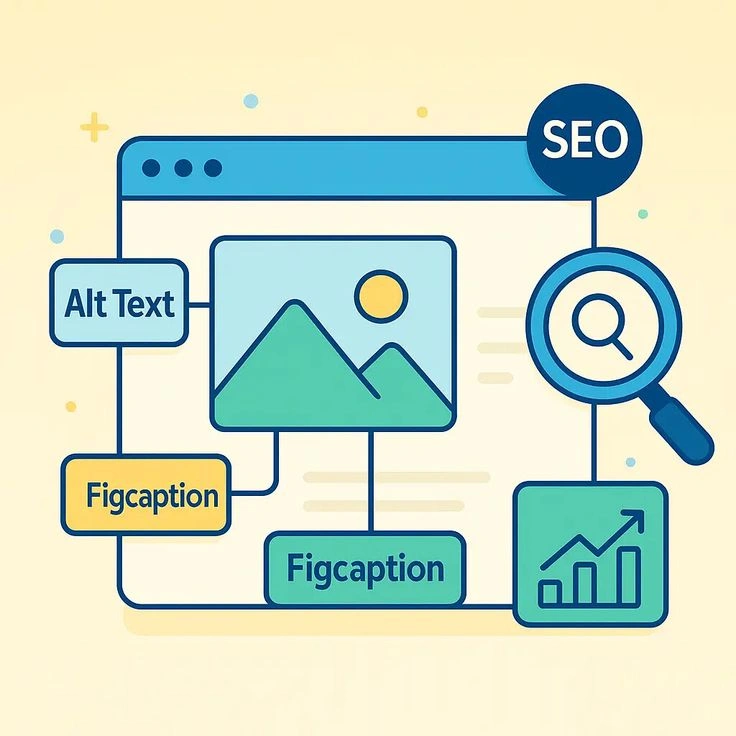
Google Updates About Alt Text
The recent Google updates about alt text focused on bringing expectations back to basics. Google made it clear that alt text should describe an image accurately and usefully. It should reflect context. It should not be treated as a place to repeat a primary keyword four different ways. It should not be used to stretch the boundaries of relevance or spam signals.
What stood out in the alt text Google update was emphasis on natural language. Google said that short but meaningful descriptions work best. There is no benefit to stuffing product names, locations, or long phrases that do not improve the experience for users who rely on assistive tools.
This update matters for businesses that operate in image-heavy niches, especially ecommerce, travel, real estate, and marketing agencies. Teams often fall into a mechanical habit when writing alt text. The new reminder helps reset those habits and focus on clarity.
Is Alt Text Part of SEO Strategy Today?
Yes. But the role has changed.
You should still care about whether Is alt text part of SEO because SEO is multi-layered. Success requires readability, accessibility, relevance, clarity, and proper structure. Alt text touches all of these. It supports search, not by feeding ranking formulas, but by improving the environment Google evaluates.
Think of it this way. Search engines need signals. Not shortcuts. The more descriptive your images are, the easier it is for Google to interpret the page's purpose. That supports ranking. So alt text is part of SEO in the same way as clean code, intuitive layout, and clear headings are part of SEO. They improve signals without being direct ranking levers.
This perspective frees you from pressure. It lets you write alt text that does its job well. It keeps your team focused on quality instead of gaming a metric that does not exist.
What Google Really Wants From Image Optimisation
Alt text is one piece of the image optimisation puzzle. There are bigger factors that matter much more. Google weighs context, placement, file names, captions, and image quality. It reads the page around the image. It checks for consistency. It measures loading performance.
This means that modern image optimisation is about a full environment. Not one tag.
If you want to strengthen visual content, here is the short version. Keep images light, clear, relevant, and placed near the text they support. Add alt text that describes the image for real people. Make sure the images load quickly. Use responsive formats. And do not ignore accessibility.
These principles still sit at the centre of image SEO best practices. They also future-proof your site for algorithm changes because they serve both search engines and human visitors.

The Problem With Over-Optimising Alt Text
Over-optimisation usually comes from fear. Team members want to squeeze every possible signal into every possible space. They repeat keywords. They push brand names. They describe things that do not exist in the image. They turn descriptions into miniature ads.
This approach backfires. Google can detect unnatural patterns. Screen reader users get frustrated. The site becomes less inclusive. Rankings suffer because usability signals suffer. When Google explained that alt text is not primarily an SEO choice, it was also signalling that over-optimisation is not worth the effort.
Worse, it is a waste of time. You can get far better results by improving image context or adjusting layout. The ROI on stuffing alt text is close to zero.
How to Write Alt Text the Right Way
Alt text should answer one simple question:
What is the essential point of this image?
If someone using a screen reader needed to understand the same information as a sighted viewer, what short line of text would give them that clarity?
That is your alt text.
You do not need long descriptions. You do not need marketing language. You do not need to repeat the page’s primary keywords. A simple, clear description is enough. When the context is already obvious, such as a decorative divider, alt text can be left empty.
This is also where smart workflows shine. Many teams are now generating alt text through automated tools. Automation helps, but only if your team reviews each entry. Tools sometimes misread intent or produce generic text. Human oversight ensures accuracy.
Why Alt Text Still Matters Even Without Direct Ranking Power
Alt text matters because modern search engines evaluate the overall experience. Google rewards clarity. Google rewards accessibility. Google rewards sites that serve visitors well. Alt text is a small but consistent contributor to that environment.
When you write alt text the right way, you help search engines interpret your content more accurately. You help your visitors access what they need. You avoid penalties. You build trust.
SEO has changed. But clarity and accessibility will always matter.
For Businesses Competing in Strong Markets
If you operate in a competitive region like Dubai, where digital competition is intense and marketing budgets stay high, understanding the real role of alt text becomes part of your larger strategy. Agencies offering search engine optimisation services in Dubai often educate clients on how all signals work together. Alt text may not be a direct ranking lever, but it improves the ecosystem that supports ranking potential.
In crowded markets, small improvements stack up. That is why teams should treat alt text with purpose but not superstition.
Final Thoughts
Google's stating that alt text is not an SEO matter does not lessen its worth. It enhances it. It resets expectations. It encourages quality over cutting corners. It ultimately moves creators to place accessibility at the centre of their process rather than tracking signals that never had any weight.
When you view alt text as a tool for clarity rather than a shortcut for ranking, your content improves significantly. Your visuals become more understandable, and your pages become more discoverable.
This shift ensures that search engines index content accurately and users enjoy a superior experience. It enhances the overall digital architecture, creating tangible benefits across borders and disciplines. For instance, precise alt text ensures clean, accessible code for web development projects in Dubai, while simultaneously boosting organic visibility for a digital marketing agency in Gurgaon. Ultimately, when clarity is the goal, SEO improvement happens naturally
So, the next time someone asks Is alt text an SEO factor, you can confidently say yes, just not in the way they might think. It is part of the structure that is a factor for SEO, not a standalone. And in the space of SEO today, that distinction is exactly what you need in your strategy.