Table of Contents
- 1. Improved Website Navigation
- 2. Enhanced Search Engine Crawling
- 3. Better Distribution of Link Authority
- 4. Increased Time on Site
- 5. Reduced Bounce Rate
- 6. Clear Content Hierarchy
- 7. Support for Topic Clusters
- 8. Faster Indexing of New Pages
- 9. Improved Keyword Ranking Potential
- 10. Enhanced User Experience
- 11. Better Conversion Pathways
- 12. Greater Content Visibility
- 13. Stronger Website Structure
- 14. Improved Mobile Navigation
- 15. Long-term SEO Growth
- Why These Benefits of Internal Linking Matter
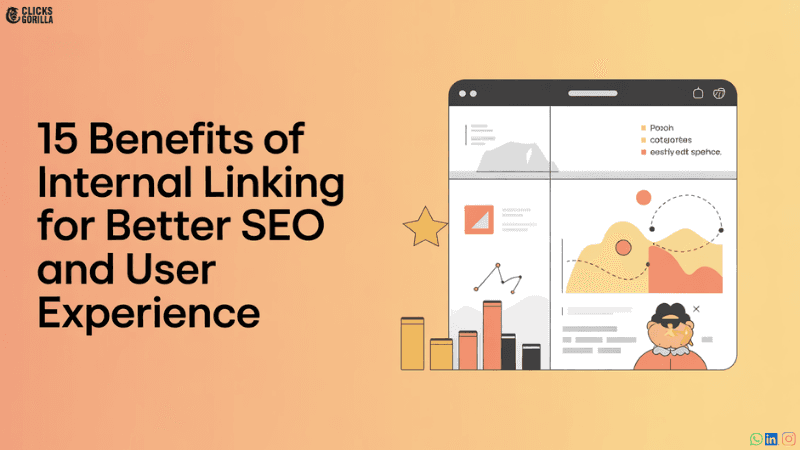
A strong internal link structure is one of the most effective ways to improve search engine visibility, as noted by industry experts like Clicks Gorilla, which specialises in providing e-commerce SEO services in India. It also enhances user journeys across your website.
Many website owners still wonder what internal links are and their benefits, but the concept is simple.
Internal links connect one page of your site to another, allowing search engines to understand your architecture while helping users discover relevant information effortlessly.
When implemented strategically, the benefits of internal linking become evident through increased engagement, improved crawlability, and stronger authority signals across key pages.
Understanding the benefits of internal linking in SEO helps businesses prioritise this essential technique in their optimisation process. Internal linking guides search bots through your content, passes value from strong pages to others, and gives structure to your entire digital presence.
These improvements directly support your ability to outrank your competition on Google by ensuring every page contributes to your overall authority rather than standing isolated. It also enhances usability, which is why internal linking is important for SEO in both technical and experience-oriented contexts.
1. Improved Website Navigation
Internal links play a key role in guiding users naturally from one page to another, helping them discover related topics without confusion.
When visitors can navigate your website easily, their experience becomes smoother and more intuitive. This organised navigation reduces friction and helps users find exactly what they need with minimal effort.
A clear linking structure ultimately increases satisfaction, encourages deeper exploration, and builds a more user-friendly website environment that supports trust and engagement.
2. Enhanced Search Engine Crawling
Search engines rely on internal links to travel from page to page and understand your site’s structure.
When your content is connected properly, search bots can discover new pages much faster and index them more efficiently. This helps every important page become visible in search results sooner.
A strong linking pattern also allows search engines to interpret relationships between topics, improving how your site is categorised. Better crawling ultimately supports stronger rankings and broader visibility.
3. Better Distribution of Link Authority
Internal links allow authority earned by high-performing pages to flow naturally to other important pages.
This distribution strengthens your website’s entire ranking profile and ensures that valuable content gets the visibility it deserves. When link authority spreads evenly, it boosts overall SEO stability and helps newer or less prominent pages gain momentum.
Over time, this creates a more balanced and powerful site structure that consistently supports higher search engine performance and competitive positioning.
4. Increased Time on Site
When visitors find relevant links within your content, they are more likely to explore multiple pages.
This extended engagement increases the total time users spend on your website, signalling to search engines that your content offers meaningful value. Longer session durations also help strengthen user trust, as people feel encouraged to continue reading and learning.
A carefully planned internal linking approach enhances the browsing experience and motivates users to stay actively involved with your content.
5. Reduced Bounce Rate
A well-linked website encourages users to stay longer instead of leaving after viewing only one page.
When visitors are presented with helpful links to related information, they feel guided and supported during their journey. This naturally reduces bounce rates, which is an important indicator of content quality and relevance.
Lower bounce rates also contribute positively to SEO performance, as search engines recognise that your site consistently fulfils user intent and provides meaningful exploration paths.
6. Clear Content Hierarchy
Internal links help define the structure of your website by showing search engines which pages are most important and how topics relate to one another.
This clarity creates a logical hierarchy that makes your content easier to interpret and organise. When search engines understand your structure clearly, they can rank your pages more accurately.
A strong hierarchy also helps users navigate your site confidently, ensuring they always know where they are and what information connects logically.
7. Support for Topic Clusters
Internal linking is essential for building strong topic clusters, which group related content pieces under a central theme.
These clusters establish authority on a specific subject by showing depth, breadth, and expertise. When pages are linked properly, search engines recognise the cluster and reward it with better visibility.
Topic clusters also improve user experience by offering a complete set of resources in one place. This approach strengthens both content relevancy and overall SEO strategy.
8. Faster Indexing of New Pages
Newly published pages often take time to appear in search results, but internal linking significantly speeds up this process.
When you connect fresh content to already indexed pages, search bots can reach and crawl the new pages much faster. Faster discovery leads to earlier indexing, which means your new content begins ranking sooner.
This efficient flow also helps maintain the freshness of your website, signalling that your site remains active and consistently updated for users.
9. Improved Keyword Ranking Potential
By linking relevant pages together, internal links pass important SEO signals that help reinforce keyword themes.
This strengthens the chances of ranking for targeted keywords across multiple related pages. The more clearly your content supports a specific keyword topic, the easier it becomes for search engines to understand your authority.
Internal linking creates a network of relevance that benefits both new and established content, leading to stronger and more stable keyword ranking performance.
10. Enhanced User Experience
A thoughtful internal linking strategy makes browsing more intuitive by helping users locate information quickly and without confusion.
When content is connected in a logical progression, visitors enjoy a smoother journey through your site. This ease of navigation encourages deeper engagement and reduces the frustration of searching for related topics manually.
As a result, users develop a more positive perception of your brand. Enhanced user experience ultimately leads to better satisfaction, loyalty, and long-term trust.
11. Better Conversion Pathways
Internal links guide users toward important pages such as service sections, product details, or contact forms, helping them move naturally through the buying journey.
When visitors are provided with clear pathways, they understand where to go next and are more likely to take meaningful actions. This structured movement improves conversion opportunities by eliminating confusion and keeping users engaged.
Well-placed links support smoother transitions from awareness to decision-making, resulting in more effective conversion funnels.
12. Greater Content Visibility
Older content often becomes buried on a website, but internal linking keeps it active by connecting it to new or high-traffic pages.
When users encounter links to older articles, they are encouraged to explore them even long after publication. This maintains visibility for valuable pages and prevents important content from losing relevance over time.
Continuous visibility also strengthens SEO performance, as search engines recognise that older pages still contribute meaningfully to your content ecosystem.
13. Stronger Website Structure
A well-linked website feels organised and easy to navigate, both for users and search engines.
Internal links create clear pathways that highlight relationships between pages and help build a stable overall structure. This organised environment improves comprehension, making it simpler for search engines to evaluate your site.
A strong structure also enhances user confidence, as visitors can move through your content without confusion. The result is a more consistent, professional, and high-performing website.
14. Improved Mobile Navigation
Internal linking greatly enhances navigation on mobile devices, where screen sizes are smaller and browsing can feel restrictive.
Clear linking pathways guide users smoothly from one topic to another without excessive scrolling or repeated searching. This ease of movement is especially important for mobile users who prefer quick access to relevant information.
A mobile-friendly linking approach improves user satisfaction, boosts engagement, and ensures your site performs well across diverse devices and viewing experiences.
15. Long-term SEO Growth
A consistent internal linking strategy builds authority steadily over time, helping your website grow stronger in search rankings.
As links continue to support relevance, navigation, and indexing, the cumulative effect boosts long-term SEO performance. This sustained growth makes your site more competitive and stable in search results.
Over time, internal linking turns your content ecosystem into a powerful network that continually increases visibility, user engagement, and overall search engine trust.
Why These Benefits of Internal Linking Matter
When executed properly, the benefits of internal linking create a strong foundation for long-term SEO success.
Understanding what internal links are and understanding their benefits gives clarity to how individual pages support the overall performance of your website. These links ensure smooth user journeys and add structure that search engines depend on.
This is also why internal linking is important for SEO when the goal is to outrank competition on Google and build a sustainable digital presence.
Companies looking for strong digital performance, including those working with a UI UX design company in India, understand that internal linking is not only a technical requirement but also a key user experience enhancer.
A well-linked site improves navigation, highlights priority pages, and strengthens your authority over time.