Table of Contents
- 1. Quality and Relevance of Content
- 2. Keyword Intent and Topic Match
- 3. Backlink Quality and Authority
- 4. Website Structure and Crawlability
- 5. Page Speed and Core Web Vitals
- 6. Mobile Friendliness
- 7. On-Page Optimisation Signals
- 8. User Engagement and Behaviour Signals
- 9. Domain Authority and Trustworthiness
- 10. Content Freshness and Update Frequency
- 11. Technical SEO and Indexing Health
- 12. E E A T Experience, Expertise, Authoritativeness and Trust
- Why Understanding Ranking Factors Matters
- Conclusion
Visibility in search results comes from a complicated group of signals that determine where on the search results page companies and/or content creators will rank. As algorithms change over time, determining which factors are the most powerful will be crucial for any modern SEO strategy.
Given the increased competition across digital offerings, everyone from businesses to content creators will need to better understand what these working signals do for them and how they can impact ranking outcomes. The purpose of this article is to outline the twelve most influential seo ranking factors that Clicks Gorilla, a premier provider of IT consulting and strategy services in India, believes will provide businesses with meaningful recommendations related to their visibility, traffic, and long-term growth.
Given that brands want reliable insights into Google ranking factors that create "rules of thumb" to inform their work, the best way to understand these is through long-term trends, recommendations, or factual performance data in the real world.
If you've ever had questions about the most influential Google ranking factors, this guide is designed to clarify the core variables influencing them and how hiring a top agency providing Google Ads services in India can help you target audiences and shape contemporary performance in search.
1. Quality and Relevance of Content
Search ranking systems rely most strongly on quality content. Google will recognise and reward information that addresses user intent in a clear, accurate and meaningful way. High-quality long-form content, headings and subheadings, relevant examples and useful insights will all improve content performance dramatically.
Google also boosts content that is unique and not just presenting generalised information. Using sophisticated algorithms, Google determines context, depth and value, which is why content relevance is still one of the SEO-ranking factors influencing search visibility and traffic.

2. Keyword Intent and Topic Match
Contemporary algorithms rank content not only on keywords but on matching intent. When a page matches the true intent of what users are searching for, it performs better in ranking. Knowing user intent allows marketers to create content that creates true value and meets user expectations.
Both variations of searched content and semantic terms help you understand what people are searching for and how Google understand what they are looking for. This is especially useful when looking at Google page ranking factors, since intent and relevance are huge factors that affect visibility.
3. Backlink Quality and Authority
Backlinks continue to be a fundamental element of the factors Google uses to rank websites. Google interprets each backlink as an indicator of trust and authority. However, while quantity will always be a factor, trust and quality are much more important. Links from high-quality, trustworthy, and niche-relevant websites will have much greater value compared to low-quality links.
Google's systems also consider anchor text relevance, the trustworthiness of a domain, and natural link patterns. An authority profile is among the most definitive answers when people ask what are the important Google ranking factors.
4. Website Structure and Crawlability
Search engines rely on proper crawling to discover and index pages. Websites with clean architecture, internal linking and organised navigation perform better because they are easier to understand. A well-structured website helps Google determine the relationships between pages.
Crawlability issues often lead to ranking losses. Technical optimisation ensures that search engines can fully access content and include it in results.
5. Page Speed and Core Web Vitals
Fast-loading pages improve user satisfaction and directly influence ranking. Core Web Vitals measure performance indicators related to loading, visual stability and interactivity. Pages that meet these standards consistently rank higher over time.
Speed also affects bounce rates and engagement signals. Website owners must continually monitor performance to stay competitive.
6. Mobile Friendliness
The majority of web traffic is mobile-based. A site that is mobile-friendly delivers smoother experiences, clearer layouts and easier navigation. Since Google uses mobile-first indexing, websites must prioritise mobile performance to maintain visibility.
Mobile optimisation has become a non-negotiable signal within modern seo ranking factors.
7. On-Page Optimisation Signals
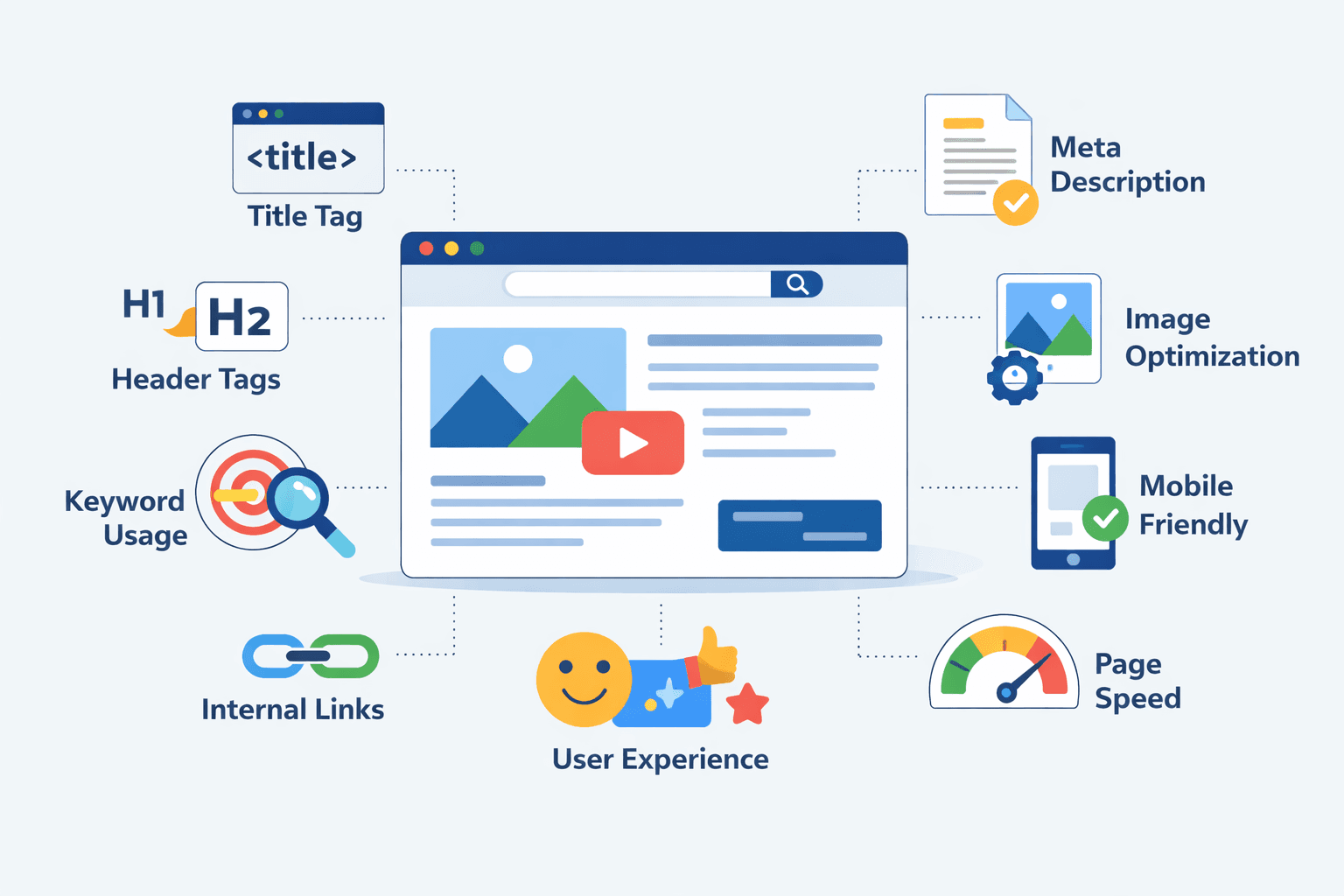
Search engines rely on a strong on-page structure to interpret content. Signals include title tags, meta descriptions, header tags, internal links, alt attributes and keyword placement. Together, these components influence visibility and improve relevance.
Strategic optimisation ensures that search engines can understand the context of each page. These on-page seo factors guide crawling and classification, helping content rank for the correct search queries.
8. User Engagement and Behaviour Signals
User engagement indicators like time on page, scroll depth, and bounce rate show how well content satisfies visitors. When users stay longer, explore more pages and return frequently, Google interprets these patterns as positive signals.
Behaviour-based measurement is not about manipulating metrics but creating authentic, valuable experiences that naturally improve performance.

9. Domain Authority and Trustworthiness
Google evaluates the credibility of websites based on trust, reliability and historical performance. Websites with a long record of publishing accurate, expert content receive stronger authority signals. This includes reputational factors, brand recognition and consistency of high value output.
The importance of domain trust became clearer after the analysis of Yandex's leak ranking factors, where authority signals were heavily emphasised.
10. Content Freshness and Update Frequency
Google rewards content that stays updated. Many industries change rapidly, and outdated pages lose relevance. Regular updates signal that a website remains active and committed to providing accurate information.
Freshness matters more for industries like finance, health, technology and news, but still benefits evergreen content.
11. Technical SEO and Indexing Health
Technical excellence ensures that Google can read and interpret a website without errors. Factors include XML sitemaps, schema markup, hreflang tags, clean robots rules and secure protocols.
Technical performance is also connected to Google page ranking factors, since indexing health determines how frequently a site appears in results.
12. E E A T Experience, Expertise, Authoritativeness and Trust
E E A T forms a vital foundation of Google ranking factors because it evaluates the overall quality of content and the people behind it. Google prioritises websites that demonstrate expert insights, helpful information and trustworthy authorship.
This is especially important in sensitive categories like medical, legal or financial topics, where accuracy and authenticity are essential.
Why Understanding Ranking Factors Matters
Achieving strong SEO requires an understanding of the signals that shape performance and how they coalesce for performance, which makes these twelve components the most indicative SEO ranking factors influencing visibility today. They support understanding of why high-quality content, technical quality and authoritative links continue to shape long-term ranking performance.
Brands and businesses that invest in strategic optimisation can achieve better visibility, strong user engagement and improved organic performance. Many organisations choose to work with a search engine optimisation agency in the UAE to help refine their strategy and keep up with ever-changing algorithmic standards.
Understanding the strongest signals will further support teams to stay ahead of the changes and synthesise new changes, such as algorithmic updates to include more AI-based quality scoring, improved user satisfaction signals, and deeper semantic understanding.
Conclusion
While Google’s algorithm looks at many factors, the twelve factors considered in this post are the most influential on ranking performance. Once marketers understand what Google ranking factors are most important, marketers can develop strategies that sustain long-lasting visibility. Quality, authority, technical optimisation and user experience remain the basis of strong rankings representing valuable Google ranking factors.