
Table of Contents
- What Exactly Are Core Web Vitals?
- Why Core Web Vitals Matter So Much
- How to Monitor and Test Your Web Vitals
- Improving Core Web Vitals Without Losing Design Quality
- Understanding the Meaning of Stable Vitals
- Avoiding Common Mistakes in Core Web Vitals Optimisation
- Core Web Vitals and Google’s Algorithm Connection
- The Technical Side of Core Web Vitals
- Why Businesses Can’t Ignore Core Web Vitals
For years, marketers and webmasters focused on keywords, backlinks, and meta descriptions as the core of SEO. But as the internet evolved, the digital landscape shifted drastically with newer algorithms and updated metrics.
Google’s focus moved from machines to people, rewarding websites that deliver not just information, but an exceptional user experience. This shift gave rise to Core Web Vitals, the new foundation of performance-focused SEO. Navigating this transition often requires the foresight of an IT Consulting & Strategy Services Company in India to align a website's architecture with these evolving standards.
Core Web Vitals are the key metrics Google uses to determine whether your website is fast, responsive, and visually stable. In short, they help search engines quantify user satisfaction.
A page that loads slowly, reacts late, or jumps around instantly hurts the user experience. Resolving these backend issues, such as server response times or unstable code, is often where a Managed IT Support Services Company in India plays a critical role in maintaining technical health.
This makes Core Web Vitals one of the most critical technical SEO metrics to master. A good keyword strategy may bring users to your site, but if they leave in frustration, your visibility will drop. This is a reality that experts like Clicks Gorilla emphasise: technical inefficiency drives users away, directly impacting your rankings.
What Exactly Are Core Web Vitals?
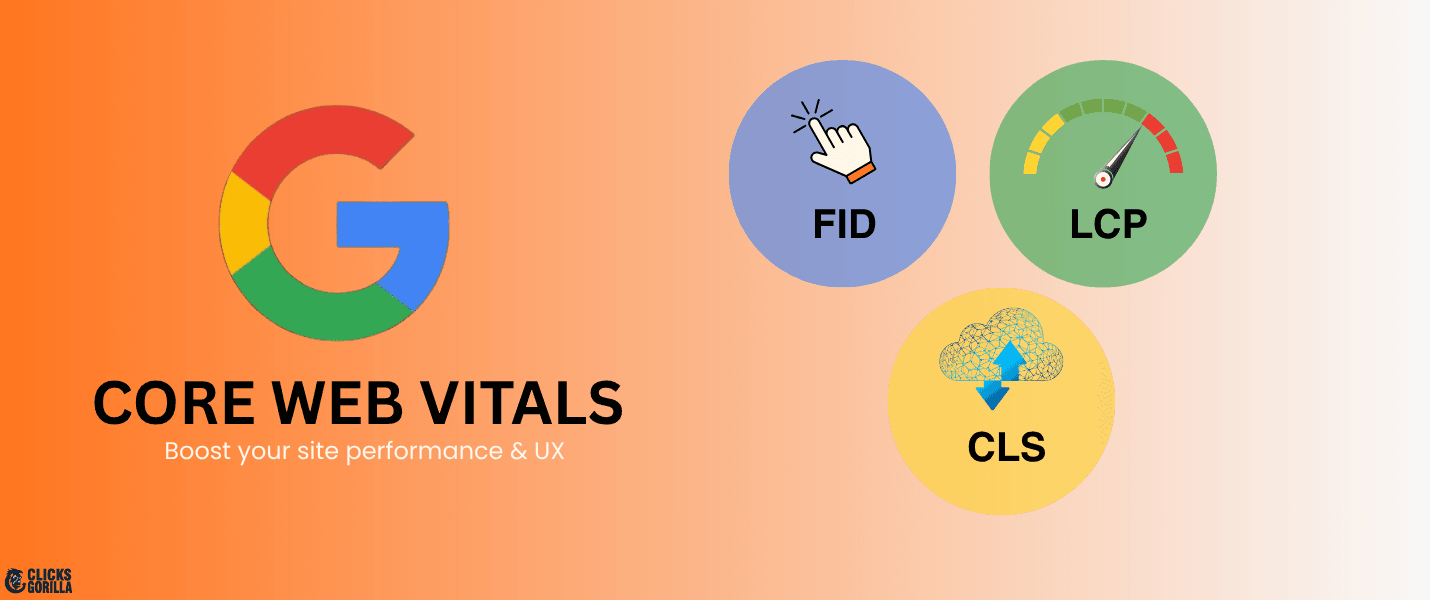
At its essence, Core Web Vitals consists of three main elements: Largest Contentful Paint (LCP), First Input Delay (FID), and Cumulative Layout Shift (CLS). These represent how fast a page’s main content loads, how quickly it responds to a user’s first interaction, and how stable the layout remains while loading, simplifying it deals with the functioning aesthetic of the site.
The Largest Contentful Paint should ideally occur within 2.5 seconds to ensure users can see the main content quickly. First Input Delay should be under 100 milliseconds to make sure the website feels smooth and responsive. Finally, Cumulative Layout Shift measures how visually stable your page is if text and images move while loading, your vitals' stable score will drop.
When these three vitals work in harmony, your website signals to Google that it delivers not just information, but quality of experience, eventually driving organic traffic to your site.
Why Core Web Vitals Matter So Much
The importance of Core Web Vitals goes beyond technical measurement; it’s about how people perceive your website. Internet users are more likely to stay on a site that is visually appealing to them because the internet is a place where the visuals are the ones that are first seen by the user before even the content, which is why maintaining a good visual aesthetic is necessary for a site. Google’s continuous updates aim to reward pages that users love visiting. When your site performs well, visitors stay longer, bounce less, and interact more, all strong indicators of relevance and reliability.
A page that fails these tests can lose traffic even if its content is perfectly optimised. The key reason is that search engines now associate good user experience with good information. Therefore, investing time in improving Core Web Vitals translates directly into higher trust and better ranking positions.
Even for mobile-first indexing, mobile page speed optimisation plays a decisive role. Most searches happen on mobile devices, and Google expects your site to perform just as smoothly there. Ensuring that your vitals are stable across screen sizes and connections builds long-term authority.
How to Monitor and Test Your Web Vitals
Evaluating your site’s performance has never been easier. Google provides tools that act as a vitals checker, giving insights into how real users experience your pages. PageSpeed Insights and Google Search Console are the most popular options, offering detailed breakdowns of loading speed, responsiveness, and layout stability.
By checking your Core Web Vitals regularly, you can detect patterns or issues that might affect your performance over time. A sudden spike in layout shifts, for instance, could point to unoptimized visuals or ad placements. Continuous monitoring ensures that your vitals remain stable and consistent across updates, traffic spikes, or design changes.
Improving Core Web Vitals Without Losing Design Quality
Optimisation isn’t just about stripping your site down to its bare bones. The real challenge is enhancing Core Web Vitals while keeping your visual appeal intact. Start by compressing large media files and using modern formats like WebP to reduce load times without affecting quality. Eliminate unnecessary JavaScript and CSS files that block rendering, and enable browser caching so your pages load faster for returning users.
To improve interactivity, focus on reducing delays caused by scripts. If your site depends heavily on animations or third-party widgets, consider lazy loading techniques. For visual stability, always define width and height attributes for images, banners, and embedded videos. These prevent elements from shifting as new content loads, ensuring your vitals are stable even during complex page rendering.
Every adjustment you make contributes to a better user experience, and that’s exactly what Google measures.
Understanding the Meaning of Stable Vitals
When experts talk about vital stable meaning, they refer to a website that performs consistently well under different conditions. It means your site loads smoothly, responds instantly, and remains visually stable across devices, browsers, and networks.
Stability builds trust. If a visitor can interact with your site seamlessly today and have the same experience tomorrow, it signals technical reliability. This consistency reflects professionalism and helps establish credibility in both user perception and Google’s evaluation.
Avoiding Common Mistakes in Core Web Vitals Optimisation

Many site owners make the mistake of chasing numbers rather than solving user problems. Passing a single PageSpeed test doesn’t guarantee that users experience smooth navigation. Avoid overloading your site with heavy visuals, autoplay videos, or non-optimised ads that disrupt loading.
Another common issue is ignoring mobile performance. A site might appear fine on a desktop but lag significantly on smaller screens. Since Google prioritises mobile experience, even a slight delay in mobile page speed optimisation can impact rankings. Which is why, in this case, Consistency is key; keep your vitals stable across all platforms.
Lastly, don’t neglect re-testing after major updates. A design change, plugin installation, or CMS update can unknowingly affect your Core Web Vitals, undoing previous efforts. Regular audits prevent such issues and help maintain long-term SEO health.
Core Web Vitals and Google’s Algorithm Connection
Every major Google update in recent years has aligned with the same goal: improving user experience. When the Page Experience update rolled out, Core Web Vitals became a central ranking factor. Since then, maintaining strong vitals has been as important as content quality or backlinks.
By staying informed through tools like a Google algorithm update checker, businesses can adapt their optimisation strategies early. This proactive approach ensures that algorithmic shifts don’t catch you off guard. Google continues refining how it reads and rewards performance data, so ongoing vigilance pays off.
In short, Core Web Vitals are a permanent fixture of modern SEO, not just a temporary ranking signal.
The Technical Side of Core Web Vitals
At the heart of these metrics lies the field of technical SEO metrics. Server response time, caching, content delivery networks (CDNs), and mobile responsiveness all influence how well your vitals perform. A technically optimised website allows content to render faster and interact more smoothly, keeping vitals stable across all visits.
Ignoring these backend factors can cost you valuable ranking opportunities. For instance, an unoptimized server may delay your Largest Contentful Paint, while poor caching can increase loading time for returning visitors. Balancing front-end design and back-end efficiency is the mark of true SEO maturity.
Why Businesses Can’t Ignore Core Web Vitals
For businesses, mastering Core Web Vitals means more than just impressing Google. It’s about delivering an effortless digital experience that builds loyalty. A fast, responsive website encourages users to browse longer, engage more deeply, and convert more frequently.
When your vitals are stable and optimised, it directly impacts key performance indicators like bounce rate, conversion rate, and average session duration. In essence, user satisfaction becomes the new SEO currency. The faster and smoother your website feels, the more your traffic and rankings will grow.
Final Thoughts: Experience Is the New Optimisation

The evolution of SEO has brought one thing into clear focus: the best websites don’t just rank; they resonate. Merely having rich content doesn't guarantee good traffic to the site; having an overall experience of the site and a majorly good user experience is a must to ensure a good SEO score, and Core Web Vitals are Google’s way of measuring that resonance through performance.
When your site loads quickly, responds instantly, and stays stable while in use, it shows a commitment to user-first design. This is what separates average sites from top-performing ones. Optimising for Core Web Vitals is no longer just about achieving better numbers; it’s about creating a seamless digital experience where technology and content work together.
In the end, search engines will always favour what users love. If you focus on improving these vital metrics today, you’re not just enhancing your site’s SEO; you’re preparing for the future of the web itself.