Table of Contents
- Understanding the Core Difference: How Users and Search Engines Respond
- The SEO Perspective: Why Structure Matters
- The User Experience Perspective: Engagement, Flow, and Behaviour
- Infinite Scroll Pagination Example: How It Works in Practice
- Performance, Speed, and Mobile Considerations
- When Pagination Is the Clear Winner
- When Infinite Scroll Dominates the Experience
- The Final Verdict: Which System Is Best for SEO?
The debate between pagination and infinite scroll has resurfaced as websites strive to strike the right balance between user experience and search engine visibility. Designers often favour the seamless flow of infinite scrolling, whereas SEO managers prefer the explicit structure of pagination for better indexing.
However, the choice depends heavily on the industry. While infinite scroll drives engagement for visual e-commerce or social platforms, it often fails for information-dense sectors. For instance, providers of IT Consulting & Strategy Services in India benefit far more from pagination, which allows potential clients to navigate complex service lists and ensures search engines can index specific technical offerings. Understanding these industry-specific nuances is critical, which is why Clicks Gorilla emphasises data-driven site architecture over following temporary design trends.
This work sits at the heart of Infinite Scrolling vs Pagination, informed by user psychology, indexing behaviours, and performance demands among fast-growing digital ecosystems. For businesses working with a web design agency in the UAE, the choice is even more pressing, as the UAE's digital landscape is increasingly competitive, requiring strong search performance alongside sophisticated visual delivery.
Other factors, such as mobile optimisation, accessible content, and behaviour loading, contribute to the ultimate decision, or even budget implications like how website design prices in Dubai might sit against developers and marketers' technical workings or demands.
Understanding the Core Difference: How Users and Search Engines Respond
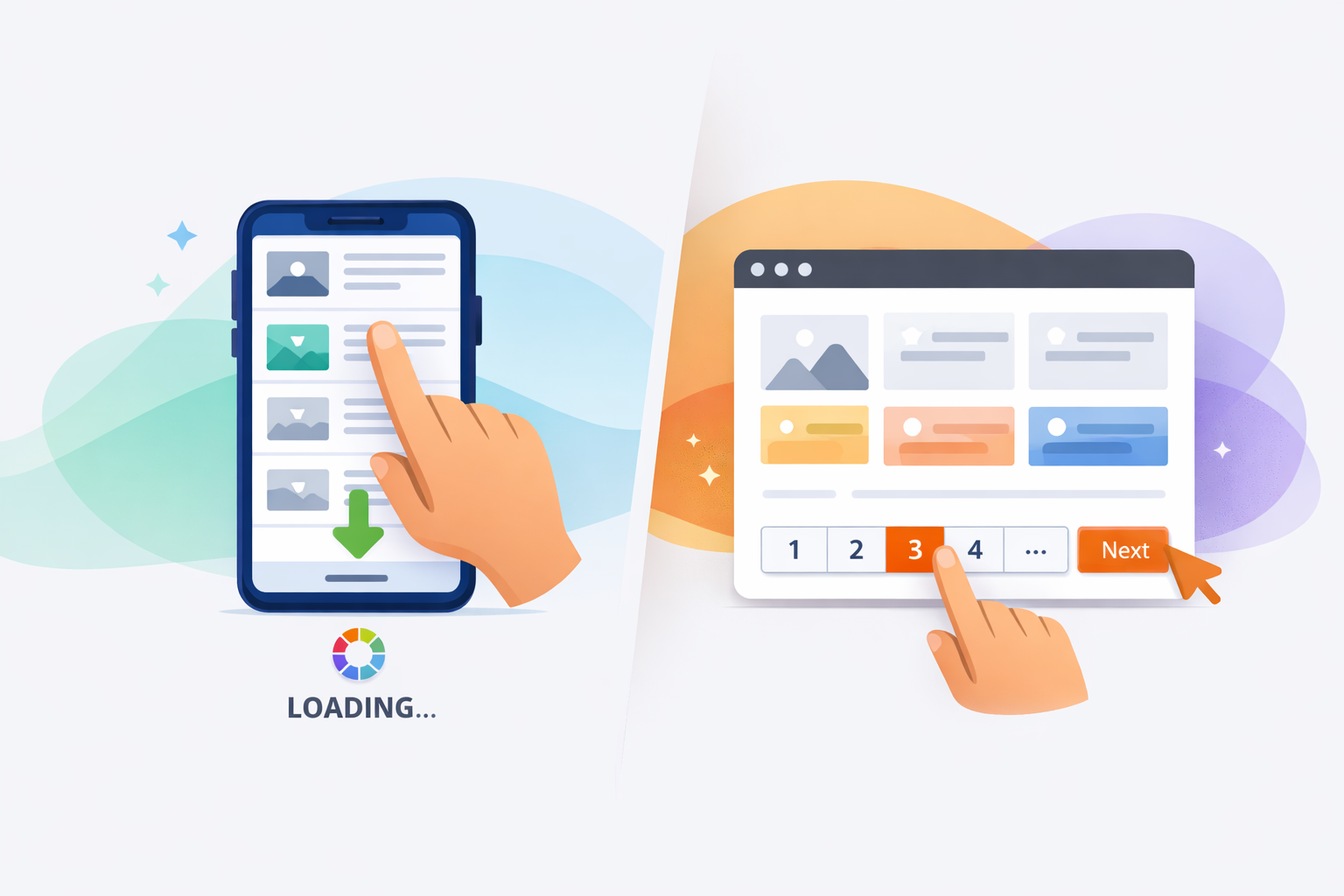
The question of “pagination” vs. “infinite scroll” is a matter of understanding how each format affects behaviour. Pagination takes content and divides it into pages that are distinct, with navigation between pages.
This format gives the user structure and predictability. Users can decide how to browse the content. Additionally, search engines also favour pagination, as the clear navigation creates a crawlable and indexable route from page to page.
Pagination allows for the user to discover older or deeper content more easily, as search bots can navigate to pages that are part of the site’s crawlable architecture.
Infinite scroll operates differently. As the user scrolls down, the site dynamically loads content for them to scroll through, creating an immersive browsing experience. This action mimics the expectations from user behaviour on social networking sites, the user scrolls down, "The More You Scroll, The More You Feel Engaged." In debates about Infinite Scrolling vs Pagination, infinite scroll is a new, modern format that is immersive.
The SEO Perspective: Why Structure Matters
Search engines favour organisation and clarity, which is why evaluating infinite scroll vs pagination is critical to SEO-oriented sites. Pagination allows for neat URLs, simple and predictable linking architecture, and a clear hierarchy.
You can even turn it into something like breadcrumbs. It makes it easier for bots to crawl lower pages, meaning older content or lower-priority pages stay discoverable. For e-commerce sites, news sites, blogs, and resource-heavy sites, the ability to use a clear structure across a lot of content is essential.
As for infinite scroll, the structure is more complex. The whole structure relies on heavy JavaScript pushing new sections onto the browsing page, often making interpretation difficult for search engines.
If pre-rendering, server-side rendering, or, well, a compliant JavaScript approach isn't in place, the search crawler only sees the first section of content. Even a call to action at the bottom won't help if the bot stops crawling once it sees the first content.
For this reason, infinite scroll becomes a risk. If you are building content specifically to rank, then it isn't indexed; that is a sign of an issue. This is also true when brands go from pagination to infinite scrolling; they should consider technical readiness, rendering capacity, and their development strategy to have their sites adhere to SEO standards.
That said, infinite scroll is not a bad pick for SEO; it's really about execution. When set up as intended, utilising lazy loading and push-state logic, especially with HTML snapshots, infinite scrolling is more than manageable from a user experience perspective, and crawls are friendly.
The User Experience Perspective: Engagement, Flow, and Behaviour
User experience often favours infinite scrolling because it creates uninterrupted discovery. People naturally prefer continued exploration, especially on content-rich platforms. In the broader debate of pagination vs infinite scroll, infinite scrolling provides emotional momentum. It removes the friction of clicking to the next page and keeps visitors immersed in a stream of content. For entertainment portals, social feeds, galleries, and inspiration-based websites, this fluidity is essential.
Pagination offers a different kind of experience. It gives users a sense of completion, order, and control. They know exactly where they are in the journey and can return to a previous page effortlessly. Blogs, editorial platforms, ecommerce stores, and technical documentation often benefit from this structured approach.
The experience feels organised rather than endless, making information easier to locate and revisit.
In the context of infinite scroll vs pagination, user experience should not only focus on engagement but also accessibility. Infinite scroll can be difficult for users who rely on keyboard navigation or assistive devices.
It can also make footers or important bottom-page content unreachable. Pagination solves these issues by creating a predictable user journey that accommodates all accessibility needs.
Infinite Scroll Pagination Example: How It Works in Practice
To understand the strengths and limitations of the system, consider an Infinite scroll pagination example on an image-heavy platform. As the user scrolls, new batches of images appear without interruption.
The system reduces friction and allows continuous discovery. Engagement rises because users do not consciously decide whether to continue. The design mimics natural behaviour. However, without proper URL updates or snapshot pages, search engines may not index these later portions. This makes the implementation critical.
In another scenario, an e-commerce platform might use infinite scroll on category pages to keep shoppers browsing effortlessly. But unless the site creates crawlable secondary URLs for each loaded segment, products beyond the initial load may never be indexed.
This single example highlights why infinite scroll must be designed with both user satisfaction and search accessibility in mind.
Performance, Speed, and Mobile Considerations
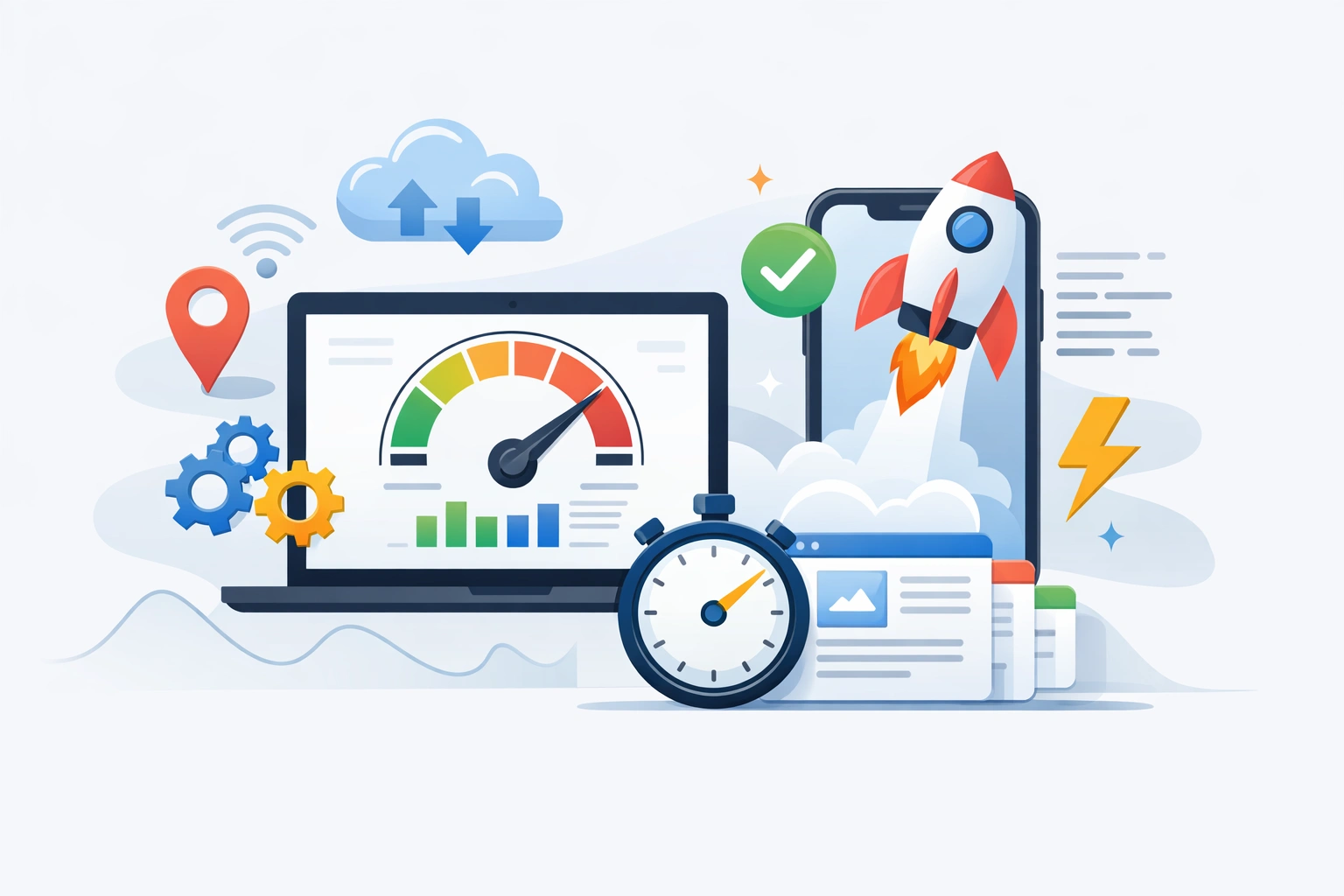
The comparison of pagination vs infinite scroll must also consider technical performance. Infinite scroll can place additional load on browsers because content continues to accumulate.
If images are heavy or scripts are inefficient, the page can slow down significantly. Pagination solves this by loading only one page at a time, keeping the experience clean and lightweight.
Mobile devices add another layer of complexity. Infinite scroll works beautifully on touchscreens but can exhaust memory or cause lag if not optimised. Pagination is stable but may interrupt the browsing flow on smaller screens.
The design decision must therefore balance performance expectations across devices, ensuring that the system remains fast, intuitive, and resilient.
When Pagination Is the Clear Winner
Pagination wins the Infinite Scrolling vs Pagination debate when the website relies heavily on SEO, structured navigation, or organised content delivery. News portals, recipe websites, documentation libraries, blog archives, and ecommerce sites benefit from clear pathways because search engines can crawl all levels of content effectively.
Pagination also benefits websites where users must track their progress or return to specific pages later. It creates order and lowers the cognitive load, allowing users to locate content easily.
For businesses comparing infinite scroll vs pagination, the choice becomes even clearer when depth and discoverability matter more than visual flow.
When Infinite Scroll Dominates the Experience
Infinite scroll is the stronger choice for platforms where engagement and continuous discovery drive performance metrics. Entertainment platforms, visual galleries, short-form content sites, and social style feeds perform exceptionally well with this approach.
The design keeps users involved longer, reduces drop-off points, and creates an intuitive browsing rhythm.
This approach works best when SEO is not the primary traffic driver or when the site has strong technical support to ensure proper rendering for search engines.
The Final Verdict: Which System Is Best for SEO?
For most SEO-focused websites, pagination is the champion of pagination vs infinite scroll. The structure, clarity, crawlability, and predictability of pagination make it favourable for search visibility in the long term. Infinite scroll can achieve similar outcomes; however, it requires a more complicated implementation, and mistakes can have an adverse impact on indexing.
That being said, this endless cycle of infinite scroll vs pagination isn't about deciding if either is a true "winner." It is more about whether the system aligns with the goals of the website and the internal technical framework. Infinite scroll is a winner in experience-led settings. Pagination flourishes in information-led settings.
A well-thought-out design will often embrace aspects of both systems, using pagination for archives and infinite scroll for selected portions of the site. The complete idea is to accommodate the needs of the users while also accommodating the crawling needs of search engines, hoping for design and discoverability to find a compromise.