
Table of Contents
- The Rise and Revolution of Voice Search
- What Makes Voice Search Different
- Why You Need a Voice Search SEO Strategy
- Understanding Voice Search Ranking Factors
- How Voice Search Affects SEO
- Optimising for Voice Search SEO
- Crafting Content That Speaks Naturally
- Technical Aspects of Voice Search Optimisation
- Balancing Voice Search and Traditional SEO
- Conclusion

In an era of rapid technological evolution, the digital landscape has transformed fundamentally. From how users interact with search engines to how algorithms index content, the old rules no longer apply. The days of typing short, robotic phrases into search bars are fading.
Today, users simply speak. Whether asking Google Assistant, Siri, or Alexa, voice-activated search has revolutionised digital marketing. This shift is so profound that it is reshaping strategies across the board; providers of SEO services in India are recalibrating their campaigns to capture these longer, more conversational queries.
While once a novelty, voice search is now mainstream. As brands adapt, understanding how to align content with a voice search SEO strategy is essential, a necessity that experts like Clicks Gorilla emphasise for ensuring long-term visibility in a voice-first world.
From Keywords to Conversations: Mastering the Future of Search
The rise of voice assistants has not only simplified how people find information but has also reshaped the entire SEO ecosystem. Marketers can no longer rely solely on keyword stuffing or traditional link-building tactics that unnecessarily burden the site with overloaded content.
The new focus lies on optimising conversational intent, improving content clarity, and structuring data for better machine comprehension. The need to adopt voice search SEO techniques is more pressing than ever because voice-driven searches are not just a trend anymore; they’re the future of digital engagement.
With nearly half of all online searches now being voice-based, understanding voice search optimisation is key to maintaining a competitive edge.
This evolution requires a shift from focusing on keywords to considering user intent and natural language. As we step deeper into the AI-driven age, businesses that adapt their SEO to voice will dominate search rankings and conversions.
In this guide, we’ll break down the mechanics of voice search SEO, explore its ranking factors, and outline a step-by-step plan to help you build a future-ready digital presence.
The Rise and Revolution of Voice Search
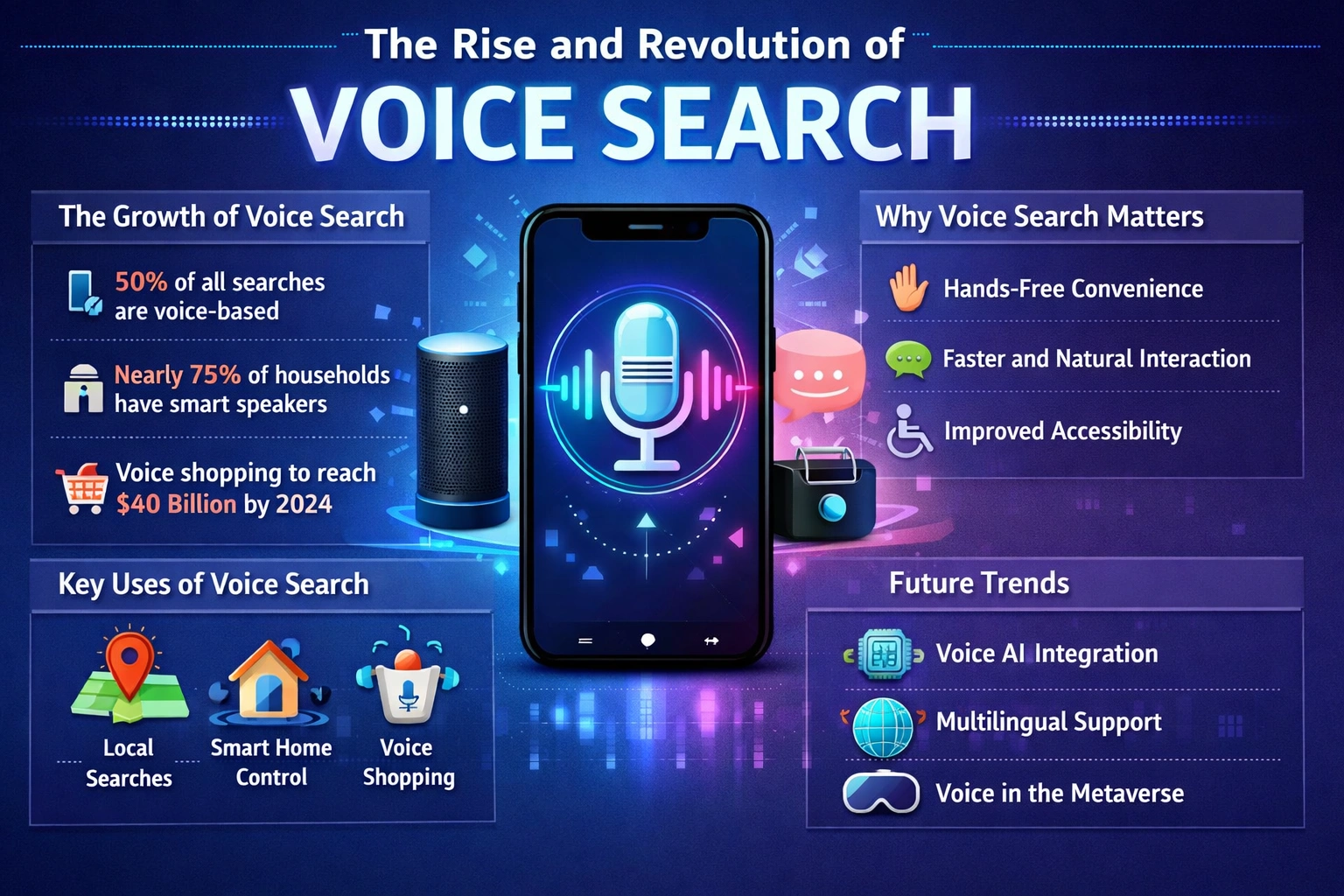
Voice search began as a convenience tool in the early days of the internet when it wasn't that much mainstream, but quickly evolved into a standard digital behaviour.
Whether users are driving, cooking, or multitasking, voice commands have made information retrieval effortless because they take away the effort of typing for that thing. This rapid growth has created new opportunities and challenges for marketers.
One key element of voice search SEO is understanding that voice queries are naturally longer and more conversational. People are more likely to ask, “What’s the best restaurant near me open right now?” instead of typing “best restaurant near me.” This subtle shift means that traditional SEO tactics need fine-tuning to meet the needs of spoken language and immediate intent.
Moreover, voice search optimisation is not limited to smartphones; it also applies to other devices. Smart speakers, wearable devices, and even in-car assistants now handle a growing percentage of these interactions.
This broader ecosystem amplifies the importance of structuring data and content in a way that search engines can interpret accurately and deliver quickly.
The rise of AI-driven assistants means marketers must adapt faster. The brands that master voice search SEO strategy will have the advantage of being the first (and possibly only) answer users hear, making it crucial to align your content for voice-first search algorithms.
What Makes Voice Search Different
At its core, voice search SEO differs from traditional search in tone, length, and context. Instead of focusing on typed queries, it focuses on spoken intent. Here’s what defines the difference between voice search vs text search:
Query length and tone: Voice queries are longer and more natural. They reflect everyday language rather than fragmented keywords, where users ask their queries in a natural conversational language rather than a formal one.
Search intent: Voice users expect immediate, specific answers, not long-winded explanations.
Device dependency: Unlike desktop searches, voice queries often come from mobile devices or smart speakers, emphasising speed and clarity.
When optimising for SEO for voice search, understanding these nuances is crucial. You’re not just targeting a set of keywords but a user’s spoken question and the context around it. Which is why it should be thoroughly understood and answered with precision, too
Why You Need a Voice Search SEO Strategy
Adopting a well-structured voice search SEO strategy ensures that your content isn’t lost in translation when users move from typing to speaking. Voice assistants pull answers primarily from featured snippets, local listings, and well-structured content. If your website isn’t optimised for these factors, you risk losing visibility altogether.
Here’s why this matters:
High user intent: Voice searches often indicate strong purchase or action intent. For instance, “find the nearest coffee shop” implies immediate need.
Limited answers: Voice assistants typically return one result, not ten blue links. Ranking #1 in voice search is far more powerful than ranking #1 in text search.
Local SEO dominance: Most voice searches are local in nature, making optimisation for regional visibility essential.
A sound voice search SEO strategy bridges the gap between conversational intent and algorithmic comprehension. It ensures that your business is ready for the next big evolution in search.
Understanding Voice Search Ranking Factors
When we talk about voice search ranking factors, we’re referring to what determines whether your content becomes the chosen spoken response. Google and other search engines rely on a combination of content quality, context, and structure to select the best answer.
Here are the key ranking factors that influence voice search SEO results:
Page speed: Voice searches demand quick responses. If your site isn’t fast, it’s out of the race.
Featured snippets and position zero: Most voice results are drawn from featured snippets' concise, well-structured answers.
Schema markup: Structured data helps search engines understand your content’s intent.
Authority and trust: Content from reputable domains with strong engagement signals tends to rank higher.
Conversational phrasing: Content written in natural language aligns with how users speak to their devices.
Optimising for these voice search ranking factors ensures that your pages are both human-friendly and algorithm-ready.
How Voice Search Affects SEO
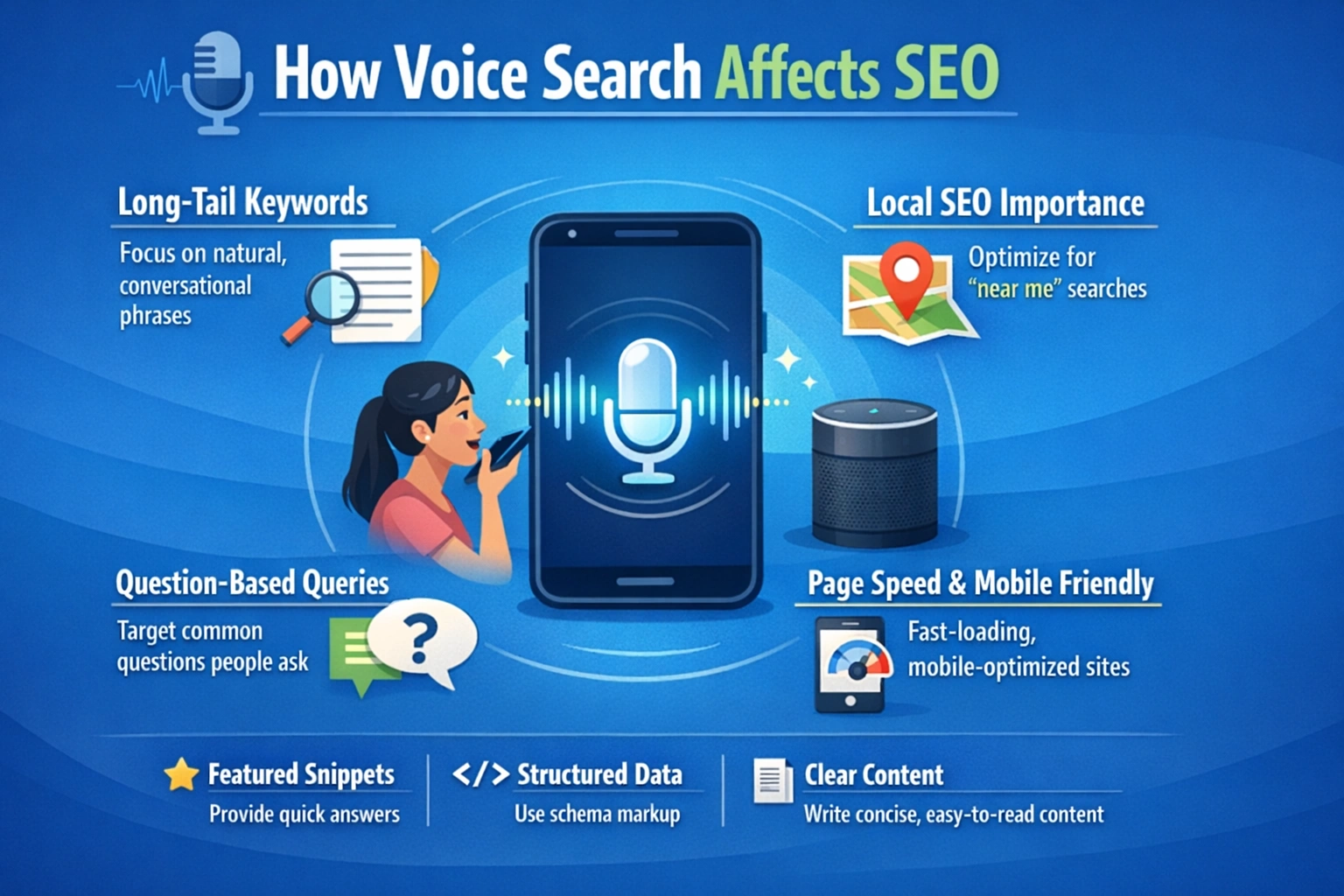
Many businesses still underestimate how voice search affects SEO and how it impacts the business and its page. A simple explanation to this question is that the shift from typing to speaking changes not only keyword strategy but also how search engines interpret content. Since voice queries often include question words like who, what, where, how, and why optimising content to directly answer such queries boosts your visibility.
Moreover, this shift emphasises semantic search, where the search engine focuses more on meaning than exact-match keywords. It means the old keyword-stuffing strategy is officially obsolete and is of no good advantage to the business. Instead, brands need to focus on intent-driven content that sounds conversational and provides direct answers.
Optimising for Voice Search SEO

Creating content optimised for voice search SEO requires adapting both your technical and creative approach. Here are practical strategies to implement:
Use conversational keywords: Long-tail keywords that mimic natural speech perform better for voice search optimisation.
Target featured snippets: Structure your content with Q&A-style formatting and bullet summaries for better snippet chances.
Enhance local SEO: Optimise your Google Business Profile, use local schema, and include terms like “near me” naturally.
Improve mobile performance: Since most voice queries occur on mobile, your site’s speed and layout must be flawless.
These techniques, combined with a well-defined voice search SEO strategy, help your content rank higher across voice platforms and make your site an SEO appealing site.
Crafting Content That Speaks Naturally
Voice-friendly content must be written the way people talk. It’s about understanding tone, pacing, and simplicity. When implementing SEO for voice search, focus on clarity and brevity. Avoid jargon-heavy text and write in a Q&A style that aligns with how users frame questions.
Example: Instead of “The most effective digital marketing techniques involve user-based keyword segmentation,” try “What are the best digital marketing methods to reach my audience?”
This conversational tone supports both voice search optimisation and readability, improving your ranking and user experience.
Technical Aspects of Voice Search Optimisation
Beyond content creation, several backend elements influence how well your pages rank for voice queries. To implement SEO for voice search, you need to ensure technical precision.
Use schema markup
Ensure SSL security
Adopt a mobile-first design
Leverage AMP (Accelerated Mobile Pages)
A technically sound website, which is effectively combined with engaging content and uses efficient SEO techniques, forms the backbone of voice search SEO success.
Balancing Voice Search and Traditional SEO
While optimising for voice is essential, balancing it with text-based optimisation ensures long-term success. Understanding voice search vs text search helps you decide where to allocate efforts.
Traditional search still drives most website traffic, but the percentage of voice-based queries continues to rise. Therefore, blending both approaches and focusing on conversational tone while maintaining SEO fundamentals ensures comprehensive coverage.
The best approach is hybrid: use structured data, natural language, and keyword mapping that addresses both typed and spoken queries.
Preparing for the Future of Voice-Activated SEO
The future of voice search SEO strategy lies in personalisation and AI integration. Search engines are becoming more context-aware, learning from user behaviour and adapting to their behaviours to deliver hyper-relevant answers. Brands that embrace this trend early will have a powerful advantage.
As devices continue to integrate voice capabilities, expect voice search optimisation to influence everything from local discovery to e-commerce conversions. Smart marketers will invest in content audits, structured data updates, and conversational keyword mapping to stay ahead.
Conclusion
With the internet and technology progressing heavily, we have come a long way from typed keywords to Voice search, which isn’t the future; it’s the present, and it's here to stay as internet users grow and the need for in-demand and immediate search grows.
Adapting to voice search SEO is not just about following a trend; it’s about understanding how users communicate and understanding their search behaviour to make our search engine adapt to them and meet them, their thoughts and queries, where they are. Businesses that embrace a forward-thinking voice search SEO strategy today will lead the digital landscape tomorrow.
By mastering voice search optimisation and aligning your content with conversational intent, you’ll not only boost rankings but also enhance trust, engagement, and conversions. In this new search era, those who listen closely to their audience will always have the loudest voice online.