Table of Contents
- 1. Content Expansion Without Tight Standards
- 2. Weak Internal Structure During Rapid Growth
- 3. Loss of Topical Authority in Crowded Categories
- 4. Outdated Content Across Wide Segments
- 5. Changes in Search Intent
- 6. Over-Reliance on High-Level Guides
- 7. Algorithm Updates Targeting Large Content Libraries
- 8. Shifts in User Behaviour and Tools
- 9. Competitive Pressure From Niche Experts
- 10. Technical Debt Accumulating Across Years
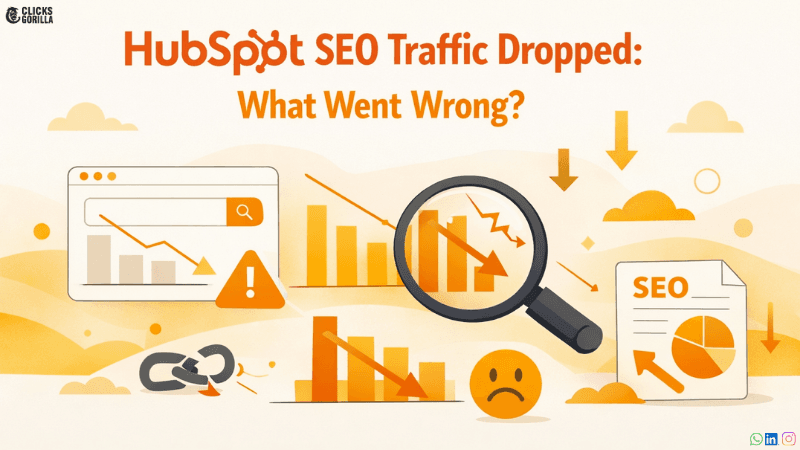
HubSpot has been a leading player in content marketing for years; however, even the biggest brands sometimes fail. The recent dip in traffic raises a critical question: How does a prominent platform lose search visibility after years of consistent growth?
Many marketing practitioners are seeking answers because the scale of the decline mirrored patterns seen in other notable drops. Understanding these signals is necessary because any brand, not just software giants, can learn from HubSpot's SEO fall to develop safer strategies.
This article outlines the structural faults and fundamental errors behind the crash. These insights are vital for digital marketing companies in Dubai, where competition intensifies every year, as well as for any Digital Marketing Agency in India looking to build resilient, long-term campaigns for their clients.
1. Content Expansion Without Tight Standards
The first sign of what goes wrong with HubSpot came from the sheer volume of content published across many categories. HubSpot invested heavily in broad keyword coverage, but the quality, freshness, and topical depth did not stay consistent. When Google updated its expectations around relevance and intent, the imbalance created friction. Many posts overlapped, repeated ideas, or targeted keywords that no longer matched user behaviour. This created the environment that led to HubSpot's SEO collapse.

2. Weak Internal Structure During Rapid Growth
Even great platforms struggle when content grows faster than their internal linking systems. HubSpot saw sections with old clusters, disconnected subtopics, and legacy link paths that no longer matched modern search patterns. These patterns created confusion for crawlers, which contributed to the hubspot seo downfall that marketers watched unfold. Studies later highlighted the same weak signals in the hubspot seo case study, which is now used as a cautionary reference in SEO training programs.

3. Loss of Topical Authority in Crowded Categories
HubSpot once dominated many keywords related to marketing, sales, and customer success. New competitors arrived with learner content, deeper analysis, and more specialised answers. This shift exposed what goes wrong with HubSpot when older articles are not consistently refreshed. Google started rewarding timelier and more actionable resources. As authority slipped, traction followed, all tied to the larger pattern behind HubSpot's SEO collapse.

4. Outdated Content Across Wide Segments
Google’s recent emphasis on freshness and helpfulness affected sites that relied on older articles. HubSpot maintained thousands of posts, but not all were updated at the pace needed. Outdated references, old screenshots, and legacy workflows weakened performance. This added to the reason behind the HubSpot traffic drop, since outdated content signals can push entire clusters down. Similar patterns were noted as another factor in the hubspot seo downfall.
5. Changes in Search Intent
Search intent today shifts fast. Users want quicker answers, clearer frameworks, and fewer broad overviews. HubSpot’s older long-form style did not always match what people needed. When intent changes but content does not, rankings slip. This is a key piece of what goes wrong with HubSpot, especially when evergreen content faces new competitors who directly match modern expectations. Slower reaction times fueled parts of HubSpot's SEO collapse.

6. Over-Reliance on High-Level Guides
HubSpot built many foundational guides. They worked for years, but as the market matured, readers sought more specialised, niche, and scenario-based content. When too many articles covered the same broad topics, relevance weakened. Google may see this as duplication or diluted expertise. The overlap contributed to the reason behind the HubSpot traffic drop, particularly in categories with strong new rivals.
7. Algorithm Updates Targeting Large Content Libraries
Google has increased scrutiny on large content sites. When updates target helpfulness, intent, and quality balance, older libraries take hits if they are not tightly maintained. HubSpot fit the profile of a site at risk. The result revealed what goes wrong with HubSpot when maintenance processes fall behind scale. Once visibility drops, recovery becomes harder because lost authority ripples across multiple clusters. This pattern appeared again during HubSpot's SEO collapse.
8. Shifts in User Behaviour and Tools
Today’s users prefer quick interactive tools, templates, and step-by-step formats. HubSpot still has strong resources, but some categories leaned too heavily on text-heavy pages. When user behaviour evolves faster than content formats, declines follow. This disconnect played a smaller but noticeable role in the slide.
9. Competitive Pressure From Niche Experts
Specialist brands now outperform general marketing blogs in many categories. They publish smaller, sharper, fast-moving content. HubSpot, due to size, moved more slowly. This allowed niche experts to outrank them on emerging keywords. The shift added momentum to HubSpot's SEO collapse over time.
10. Technical Debt Accumulating Across Years
A site this large always carries some technical debt. Redirect chains, outdated subdomains, thin pages, and slow load times in older sections build up quietly. When Google tightens quality standards, these issues surface at once. This explains another layer of what goes wrong with HubSpot when core cleanup lags behind growth demands.
Key Lessons for Marketers
While HubSpot has a reputation as a reputable brand, the drop in traffic is an impressive reminder that no platform can escape structural issues indefinitely. The HubSpot traffic drop was not due to a single moment in time. Rather, it was the accumulation of many factors, such as content that was not up to date, mismatched search intent, inconsistent quality, and technical clutter. When these issues come together, decline happens quickly and visibly.
For marketers everywhere, especially teams competing in fast-expanding digital markets like the UAE, the reminder is clear: maintain content quality, refresh key pages consistently, and closely track shifts in user intent.
You must also audit technical and structural health regularly. Above all, never assume that past authority guarantees future rankings. To ensure your strategy remains resilient against these pitfalls, experts like Clicks Gorilla help brands stay agile and future-proof their digital presence
HubSpot's stumble reminds us all that growth is only possible when clarity, relevance, and refreshment are in place. When we know what was wrong with HubSpot, we can better equip marketers to create a stronger foundation and sidestep their version of HubSpot's SEO disintegration.