Table of Contents
- Introduction
- 2. The Evolution of SEO Automation
- 3. What Are SEO Automation Tools?
- 4. Types of SEO Automation Tools
- A. Content Generation
- B. Keyword Research
- C. Link Building
- D. Technical Audits
- E. Competitor Analysis
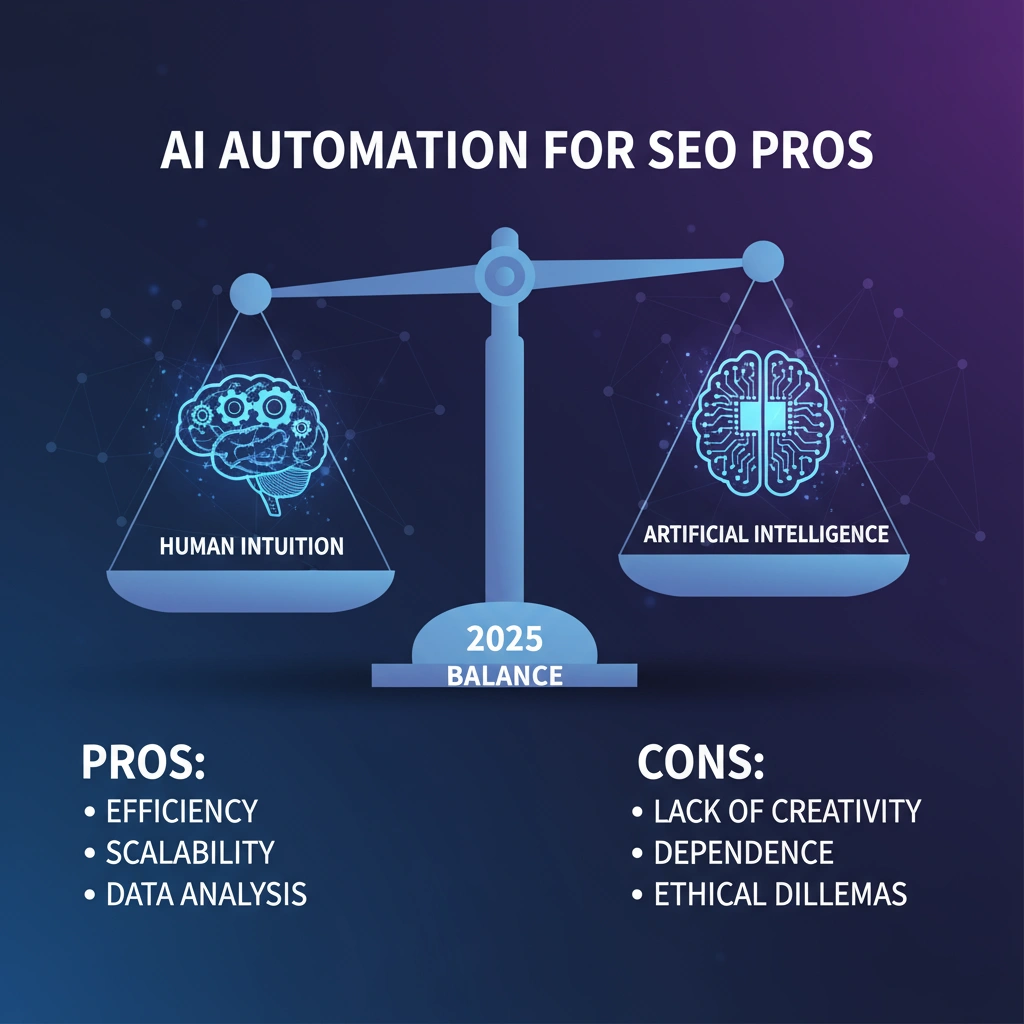
- 5. The Pros of AI Automation Tools in SEO
- 6. The Cons of Relying on AI Automation Tools
- A. Loss of Human Creativity
- B. Over-Optimization and Quality Risks
- C. Dependence on Technology
- D. Shallow Strategic Insight
- E. Ethical and Brand Concerns
- Fact: The Difference Between Human and Machine Intelligence
- 8. Striking the Right Balance: Combining AI and Human Expertise
- A. Case Studies & Real-World Outcomes
- B. Workflow Solutions
- 9. Practical Steps for Responsible AI Use in SEO
- 10. The Future of SEO: Trends and Predictions
- 11. Conclusion
Introduction
Digital marketing Service in India is in constant flux, but perhaps no aspect has transformed as radically as search engine optimization (SEO). From humble beginnings, where manual tweaks and keyword stuffing ruled, to today’s AI automation tools that promise efficiency and scale, SEO’s evolution mirrors technological progress across the digital world.
By 2026, AI in SEO will no longer be an emerging trend but a standard feature in most agencies’ and businesses’ toolkits. More than 77% of enterprise marketers report using at least one AI-powered SEO tool for tasks ranging from keyword research to content optimization (Statista, 2026). And yet, as digital teams at Clicks Gorilla and other leading firms have found, the question remains: How much AI is too much for SEO?
This in-depth guide walks through the contemporary SEO landscape, critically evaluates automation’s strengths and pitfalls, and offers a practical framework for finding the right balance. If you’re seeking actionable insights, real-world data, and candid advice on how AI can help or hurt your SEO performance, read on.
2. The Evolution of SEO Automation
To appreciate where we stand with automation now, it helps to understand how we got here. In the late 2000s and early 2010s, SEO was largely a manual process, meta tags were manually written, backlinks were acquired by outreach, and pages hand-optimized for select keywords.
As search engines grew smarter, patterns and algorithms replaced checklists. In 2020, AI began to assert its power: machine learning models like Google’s BERT and MUM could “read” intent, not just keywords. SEO tools responded in kind, promising to analyze millions of pages, suggest relevant keywords, and surface technical errors in seconds, not hours or days.
3. What Are SEO Automation Tools?
SEO automation tools are platforms, often SaaS-based, that use algorithms and machine learning models to manage, optimize, and report on SEO performance. Their promise: do more, faster, with less manual intervention.
They automate a wide range of tasks:
-
Finding new keywords at scale
-
Auditing for technical or on-site issues
-
Suggesting relevant internal/external links
-
Optimizing content for on-page factors (readability, keyword density)
-
Reporting on results and future opportunities
Popular solutions in 2026 include Surfer, Jasper, Semrush, Scalenut, Clearscope, and Outranking. Each excels in specific facets, from topic ideation to rating technical health.
Data Spotlight: The global SEO software market surpassed $2.7 billion in 2024, with AI automation Service in India representing the fastest-growing segment. (Grand View Research, 2025)
4. Types of SEO Automation Tools
A. Content Generation
AI-powered writing assistants transform outlines into full drafts and update old blog posts for semantic relevance. Today’s best tools (like Jasper and Scalenut) identify keyword gaps, suggest headings, and even generate FAQs or meta descriptions. Many agencies, including Clicks Gorilla, include these as a foundation for scalable content production.
B. Keyword Research
In the past, keyword research was a labor-intensive process: marketers would sift through spreadsheets, filter endless keywords, and make educated guesses about what their audience was searching for. Today, AI-powered SEO tools change the game entirely.
How does AI supercharge keyword research?
-
Speed: AI models can analyze millions of search queries in seconds, something a human could never achieve manually.
-
Intent-Based Clustering: Tools now group keywords not just by volume but by user intent: Are people looking for information (informational), do they want to buy (transactional), or are they trying to navigate to a site or service (navigational)?
-
Long-tail Discovery: AI identifies and recommends untapped long-tail keywords, highly specific phrases with lower competition, often missed in manual research.
-
Trending Opportunities: These platforms monitor shifts in search behavior, helping you quickly adapt to new topics or seasonality.
-
Competitive Insights: Instantly reveal which keywords competitors are ranking for and surface gaps in your own content strategy..
C. Link Building
Link building has always been critical for SEO, but it’s notoriously time-consuming. With AI automation, the process is faster and more strategic:
What does AI automate in link building?
-
Discovering Broken Link Opportunities: AI crawls both your site and competitors’ sites to find broken or outdated links, flagging easy opportunities for outreach or content replacement.
-
Competitor Backlink Analysis: Rather than manually sorting through links, AI-powered tools instantly assess which domains are linking to your rivals and the strength/quality of those links.
-
Prioritizing Outreach: AI helps score and rank potential backlink targets by authority, relevance, and likelihood to respond, so you can focus outreach where it counts.
-
Toxic Link Monitoring: Continuous analysis flags harmful links that could hurt your rankings, often suggesting which should be disavowed.
Example: Tools like Moz and Majestic can map out a competitor’s entire backlink profile in seconds, helping you replicate their successes or capitalize on links they’ve lost.
D. Technical Audits
Maintaining a healthy, high-performing website used to mean running manual checks, page by page, for errors, slow loads, or duplicate content. AI-powered technical SEO tools now handle these challenges at warp speed:
How does AI transform technical audits?
-
Comprehensive Crawling: Software can scan every page, resource, and subdomain in minutes, generating detailed reports on issues like broken links, missing alt text, or duplicate meta descriptions.
-
Prioritized Recommendations: Not only are issues identified, but they’re also prioritized based on impact, so you know what to fix first for best SEO results.
-
Actionable “Fix” Suggestions: Tools offer step-by-step guidance, sometimes even code snippets or ready-to-implement fixes, for common problems such as schema errors, slow-loading images, or mobile usability failures.
-
Continuous Monitoring: Automated audits can be scheduled to run weekly or monthly, ensuring you catch new issues before they hurt rankings or user experience.
Example: A tool like Screaming Frog or Sitebulb crawls thousands of URLs, then delivers a dashboard highlighting urgent fixes, so your team spends less time hunting problems and more time boosting performance.
E. Competitor Analysis
Automated competitor analysis has become an indispensable advantage in modern SEO strategies, moving well beyond basic monitoring to deliver deep, holistic insight, 24/7 and at scale. With AI-powered tools, marketers can track every critical move their competitors make in real time, ensuring no emerging trend or tactical opportunity slips by.
Here’s how automated competitor tracking elevates your strategy:
-
Keyword Shifts: Instantly detect when a competitor starts ranking for new keywords, loses ground on old ones, or pivots focus. AI tools can highlight these changes across thousands of search queries, helping your team quickly adapt its keyword strategy to stay one step ahead.
-
New Content Launches: Receive alerts the moment a competitor publishes new landing pages, blog articles, or product updates. Automation analyzes these pages for content themes, length, on-page SEO, and even target keywords, allowing you to fill gaps or offer better resources before they dominate rankings.
-
SERP Feature Wins: Automated systems monitor who is capturing featured snippets, FAQ boxes, or image results for target queries. This intelligence lets you identify which tactics or content types are driving competitors’ visibility, so you can refine your content and markup accordingly.
-
Link-Building Strategies: AI scans and compares backlink profiles over time, spotting new high-quality links competitors gain, lost referring domains, or aggressive outreach campaigns. You not only benchmark your site’s authority growth but also discover new sources for your own link-building.
Speed and Scale: Unlike manual research, which can be painstaking and quickly outdated, automation refreshes data constantly. This means marketers can respond immediately to shifts in rankings, new launches, and backlink spikes, delivering agile responses and gaining a decisive edge.
5. The Pros of AI Automation Tools in SEO
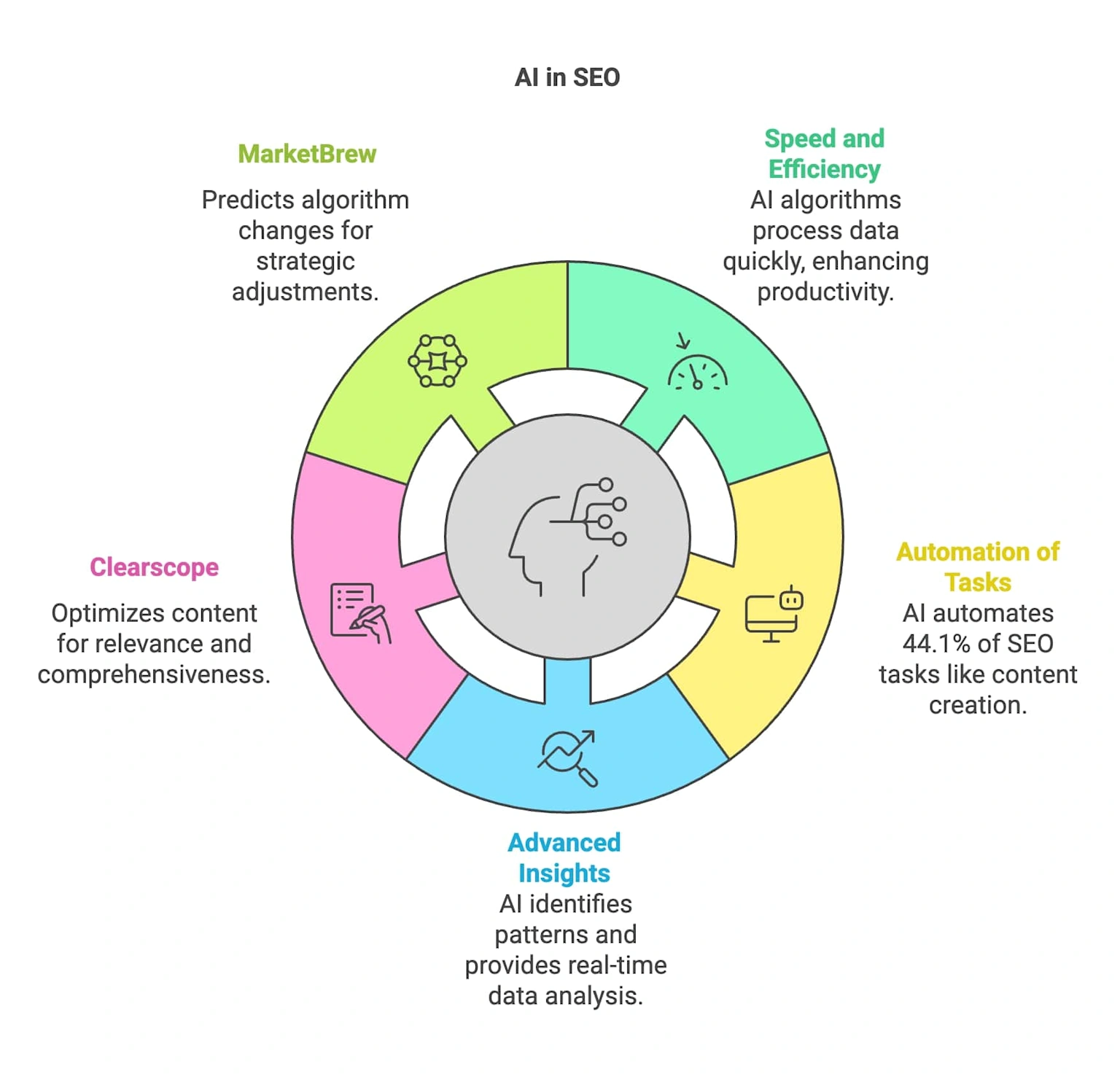
A. Efficiency and Time Savings: Much of modern SEO is repetitive: content audits, site crawls, and reporting. Automating these tasks frees up team hours for strategic planning and creative work.
Case Study: A Clicks Gorilla client’s in-house team used to spend 20+ hours a month on technical site audits. After integrating Surfer’s audit module, this shrank to 2–3 hours, and the team moved that time to content strategy and link building. The result? A 25% improvement in organic traffic in six months.
B. Scalability and Data Processing: AI crunches numbers and finds insights humans could easily overlook. Campaigns can be scaled from 10 to 1,000 pages with similar effort.
Industry Data: Marketers using automation see a 70% reduction in manual analysis time and can launch 4x more campaigns per quarter compared to manual teams. (Chiefmartec, 2026)
C. Consistency and Accuracy: Automated processes mean every page is checked for important details (meta tags, headers, loading speed) on schedule. Standardized reporting provides stakeholders with real-time metrics, eliminating subjective guesswork.
D. Cost-Effectiveness: Companies adopting automation report an average 21% decrease in SEO costs due to less manual work and a smaller risk of human error (Statista, 2026).
E. Content Optimization and Personalization: AI reviews SERPs, studying what actually ranks and feeding those patterns back into your content structure, internal links, and semantic optimization. Some tools now personalize SEO recommendations based on your site’s existing strengths and audience.
Data Point: Sites that adopt AI for continuous optimization see up to 34% more featured snippet wins and 19% higher CTRs (HubSpot, 2026).
6. The Cons of Relying on AI Automation Tools
A. Loss of Human Creativity
AI is strong with data, but weak with nuance. It can miss out on:
-
Tone, brand personality, and cultural wit
-
Creative campaign ideas that break the mold
-
Emotional arcs or storytelling that hooks readers
B. Over-Optimization and Quality Risks
Automated routines “optimize” every inch, but may:
-
Overstuff keywords, risking penalties
-
Sacrifice readability for algorithmic preferences
-
Create thin, duplicate, or formulaic content
C. Dependence on Technology
While AI automation tools offer remarkable efficiencies, heavy dependence on technology in SEO introduces several significant risks that can undermine your overall strategy:
-
Software Bugs and Glitches: Like any software, AI-driven SEO tools are not immune to bugs, errors, or compatibility issues. Unexpected outages or faulty updates can disrupt workflows, delay important audits, or generate inaccurate data, which affects campaign decisions and performance tracking.
-
Tool Outages and Downtime: Reliance on third-party platforms means your SEO process is vulnerable to service interruptions, whether from technical failures, server outages, or planned maintenance. If your team depends heavily on automation, these interruptions may halt critical tasks, impacting agility and responsiveness.
-
Algorithm Changes Impact: Search engines consistently update their algorithms, sometimes introducing sudden, significant shifts in ranking factors or indexing behavior. AI tools, which rely on historical data and established patterns, can lag in adapting to these changes, leading to misguided recommendations or missed opportunities.
-
Brittle Strategies from Over-Reliance: When SEO teams over-depend on automated outputs without regular human review, strategies can become inflexible and repetitive. This brittleness restricts creativity and nuanced judgment that is essential to respond dynamically to emerging trends or unexpected shifts in the market.
D. Shallow Strategic Insight
AI excels at analyzing vast data and offering incremental, data-driven optimizations, but it often falls short in delivering deep, strategic SEO insights needed for long-term competitive advantage:
-
Limited Storytelling and Creative Innovation: AI struggles to conceive fresh storytelling angles or innovate narrative formats. It can rehash existing content patterns but lacks the imagination to craft compelling brand stories or engage audiences emotionally, which are crucial for differentiation.
-
Inability to Unpack Deep Competitor Psychology: Understanding competitors’ strategic motivations, messaging nuances, and market positioning requires a human touch. AI tools analyze what’s visible, keywords, backlinks, content themes, but cannot interpret the “why” behind competitors’ moves, missing underlying tactics or pivots.
-
Difficulty with Strategic Market Pivots: Entering new markets, adjusting to emerging customer behaviors, or reacting to disruptive algorithm updates often demand bold strategy shifts. AI tends to recommend incremental changes based on historical data, lacking the foresight or intuition necessary for these transformative pivots.
-
Shallow Contextual Understanding: AI’s recommendations can be surface-level, bound by existing data patterns without appreciating cultural, social, or brand-specific contexts that shape successful SEO in diverse markets or niche industries.
E. Ethical and Brand Concerns
The use of AI in content generation and SEO automation raises important ethical considerations and brand integrity challenges:
-
Risks of Unintentional Plagiarism: AI-generated content often draws from vast datasets, which increases the risk of near-duplicate or plagiarized material if not carefully reviewed. This not only damages SEO rankings but can lead to legal repercussions and brand reputation harm.
-
Content Misalignment with Brand Values: Automated tools may produce content that lacks the brand’s authentic voice, tone, or messaging framework. This dilution of brand personality risks alienating loyal customers and confusing audiences, ultimately eroding trust and engagement.
-
Challenges in Compliance with Editorial and Legal Guidelines: Strict industries (healthcare, finance, legal) must adhere to rigorous regulatory standards. AI can struggle to consistently ensure compliance with such guidelines, risking costly violations or misinformation being disseminated.
-
Accountability and Transparency: Ethical SEO requires clear transparency about the use of AI-generated content. Failure to disclose or poorly supervised AI content can harm consumer trust and reduce the perceived authenticity of the brand.
Fact: The Difference Between Human and Machine Intelligence
The core difference lies in creativity, empathy, and adaptability, qualities inherently human and beyond current AI capabilities. Humans can interpret cultural nuances, emotional subtexts, shifting market dynamics, and ethical considerations, enabling them to:
-
Craft meaningful, original stories that resonate deeply with diverse audiences.
-
Adapt quickly to unexpected market or algorithm changes with innovative strategies.
-
Uphold brand integrity and ethical standards in content and communications.
-
Navigate complex, context-dependent scenarios requiring judgment and experience.
8. Striking the Right Balance: Combining AI and Human Expertise
A. Case Studies & Real-World Outcomes
Example 1: An e-com retailer used AI for site-wide technical audits and product page meta tags, but left landing page copy and blog storytelling to human copywriters. The result: their site speed and rankings soared, and customer loyalty (measured by repeat visits) went up 24%.
Example 2: A SaaS brand tried 100% AI-generated content for their blog. Rankings stayed steady, but engagement fell, backlinks dried up, and their best-performing posts continued to be those written (or heavily edited) by humans.
B. Workflow Solutions
-
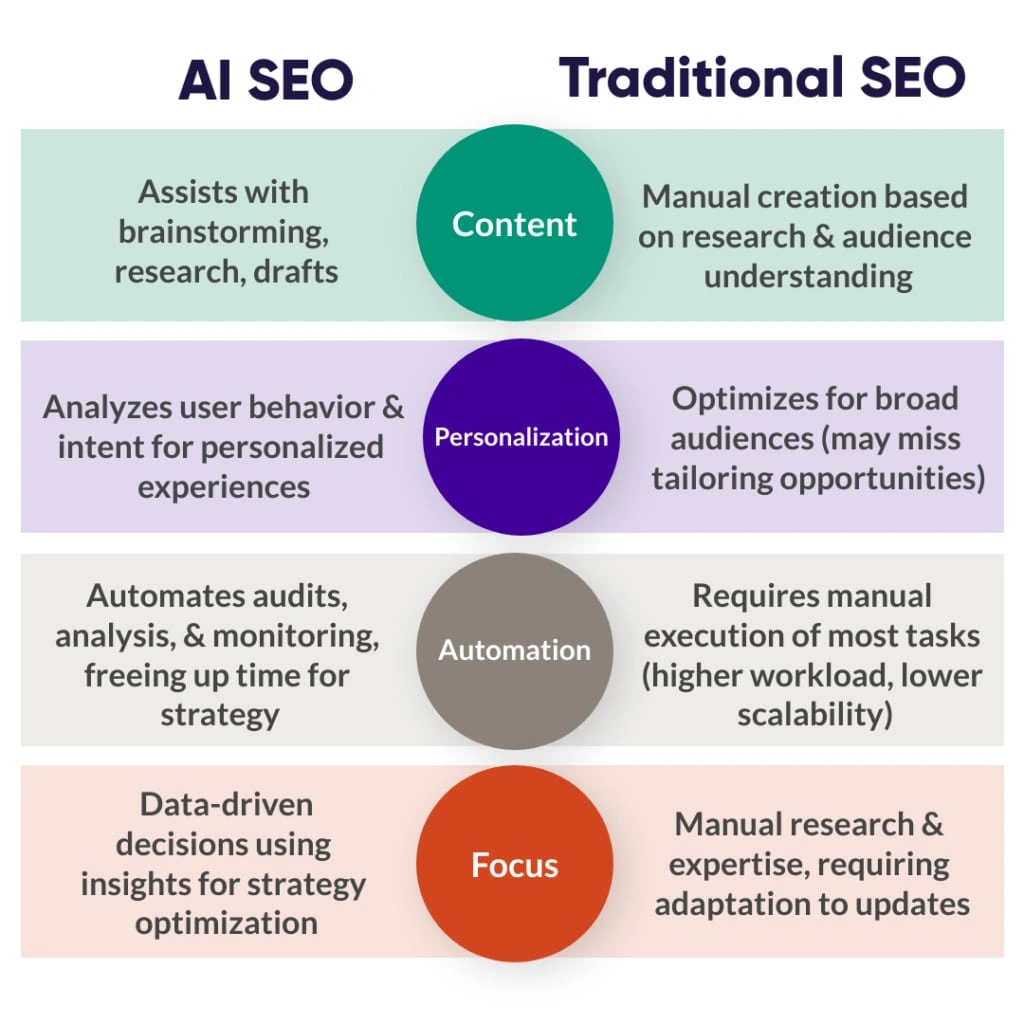
Allow AI tools to draft outlines, meta tags, or compare rankings, but always review, revise, and add a human perspective before publishing.
-
Reserve AI-led automation for repetitive, data-heavy tasks (like audits), not for strategic messaging.
C. Team Upskilling: SEO pros in 2026 are part technologist, part editor, and part strategist. Ongoing learning, especially in data analysis, AI tool mastery, and content strategy, is key to sustainable results.
9. Practical Steps for Responsible AI Use in SEO
-
Set Automation Boundaries: Identify workflow elements best handled by AI (audits, basics) versus those demanding unique voice (blogs, PR).
-
Audit Regularly: Review AI-generated content for accuracy, compliance, and engagement at least quarterly.
-
Customize, Don’t Copy: Fine-tune machine output for brand tone, messaging, and audience.
-
Keep Learning: Monitor Google's evolving rules around AI-generated content and adapt accordingly.
-
Report Transparently: Track both wins and losses, so executives and clients understand the real impact of automation.
10. The Future of SEO: Trends and Predictions
-
Predictive SEO: AI will forecast traffic and ranking opportunities before trends peak, brands able to act fastest will win.
-
Personalization: On-site SEO and even UX will adapt in real time for each user, driven by AI on the front and back end.
-
Visual & Voice Search Optimization: AI will become central to schema markup, video optimization, and even spoken or image-based search.
-
Compliance Focus: As regulations tighten in 2026 and beyond, human review will remain critical to ethical and legal SEO.
-
Hybrid Workflows: The "human+AI" model will become the standard, AI for speed, humans for depth and connection.
11. Conclusion
The rise of AI presents SEO professionals and brands with extraordinary opportunities and new risks. Automation can supercharge performance, uncover opportunities at scale, and make SEO accessible for smaller teams. But AI alone cannot anchor your brand or build lasting audience relationships.
The future belongs to those who use AI automation tools wisely, embracing the pros and cons of AI in SEO, investing in team training, and keeping a pulse on where technology’s helping or hurting. At Clicks Gorilla, and across digital marketing, the best results come from knowing that automation is a tool, not a replacement for strategic, creative, and ethical human work.
If your SEO feels stale or disconnected, now’s the moment to audit when and how you use automation. Experiment boldly, but lead with human insight.
If you want a detailed SEO audit or consultation on the best AI-human workflow for your brand, contact Clicks Gorilla today.