Table of Contents
- Why Credibility Matters in Search
- Core Principles Behind Trust-Focused Search
- How Google Detects Trust & Authority
- Concepts Every Creator Must Understand
- Practical Structure: What Helps & What Hurts
- Future of Ranking: AI + Trust Signals
- Building Trust Through Content Structure and Source Signals
- Ethical Responsibility in the Information Age
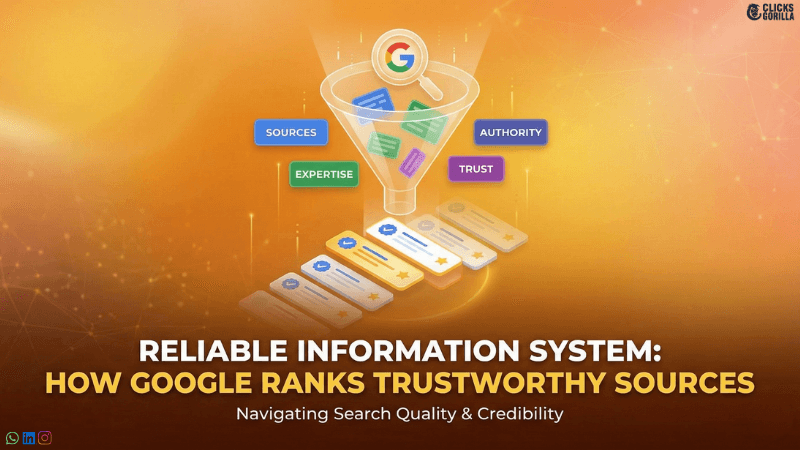
In an age of excessive digital content, it is more important than ever to be able to access credible information. Google's search ecosystem depends on the core principles of trust, accuracy, and relevance. The search engine achieves this by evaluating thousands of signals and utilising intelligent systems to promote authoritative and user-first content. Knowing how Google fashions a credible system gives everyone, from providers of Networking Services in India to brands like Clicks Gorilla, a competitive advantage as new standards develop.
Recognising how ranking factors evaluate authority is central to modern search. Every business engages in this same ecosystem where relevance and accuracy reward trust. This leads users toward credible information while minimising the ability for misinformation to dominate search spaces.
Why Credibility Matters in Search
The internet is enormous, but people are not looking for the most information; they are looking for the best information. Google is always compiling signals and updating to reinforce a level of trustworthiness. These adjustments are to keep a fair and focused search engine ranking system. With every core update, it showcases once again how, from a measurement standpoint, Google is refining which content deserves the highest level of visibility.
One of the larger shifts happening in search today is Google's mission to define results based on relevance and accuracy - rather than rewarding keyword stuffing and old tactics - search is rewards clarity, evidence, and relevancy to the user. Thus, a modern SEO strategy is directly tied to the quality of presentation, credibility of expertise, and ultimately user satisfaction. Those who understand this dual dynamic will enhance their probability of acquiring high website rankings on Google.

Core Principles Behind Trust-Focused Search
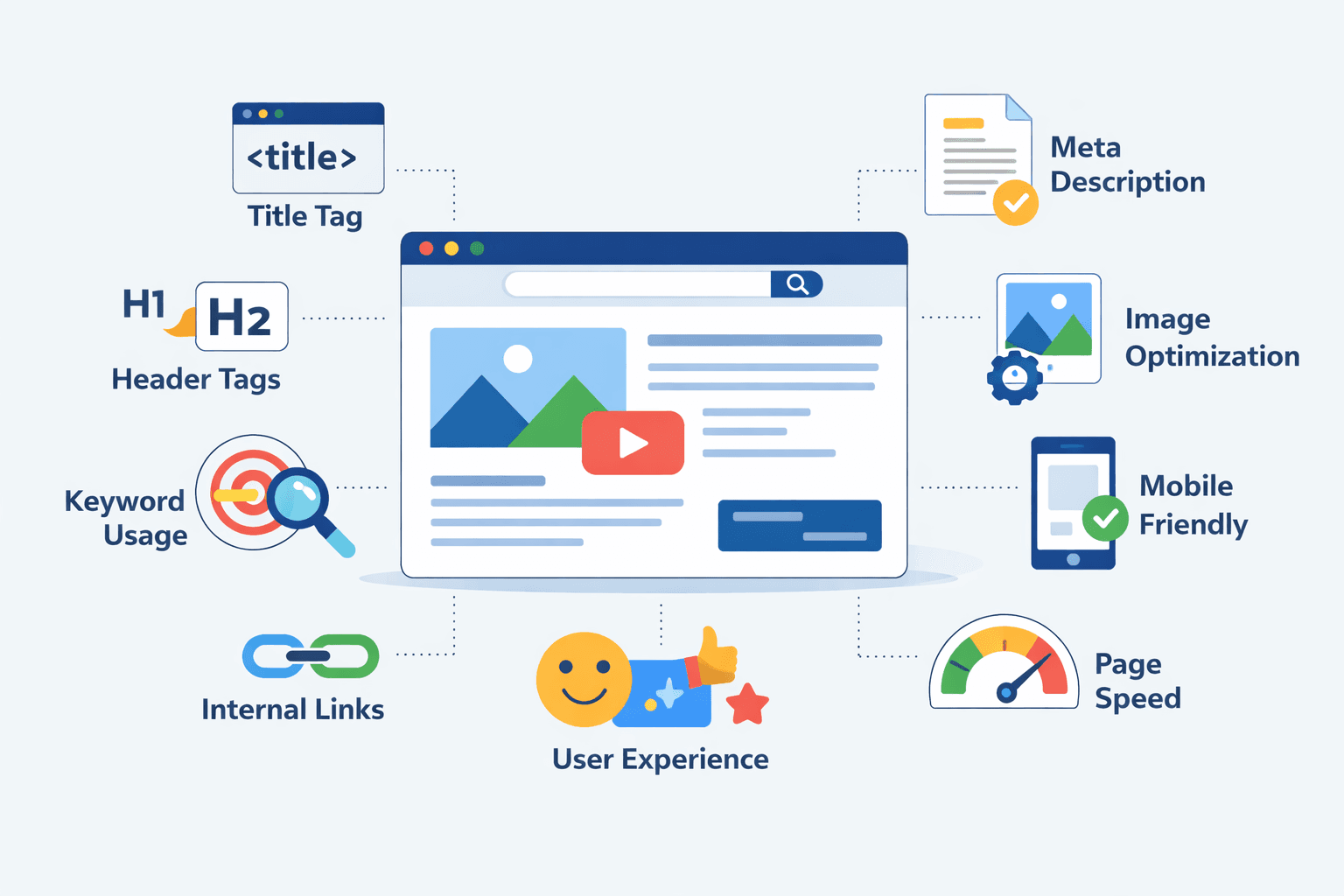
To ensure accuracy online, the platform continually enhances the signals and weight given to reputable content. There is no single formula, but Google consistently highlights that Google ranking factors prioritize authority, page experience, expertise, and content clarity.
Elements that contribute to stronger performance include:
-
Verified expertise and credentials
-
Clear and credible sourcing
-
Fast, secure, mobile-friendly experience
-
Original content demonstrating unique value
This interconnected system supports long-term success in search engine ranking by giving credible sources more visibility and discouraging manipulation. Accuracy and user-centric content elevate brands while weak or misleading material is filtered out. That is how search teams can define results intelligently across industries and ensure meaningful website ranking in Google performance.

How Google Detects Trust & Authority
Trust signals are changing. Previously, we relied solely on backlinks to signal authority. As of today, backlinks remain a key factor, but far from the only one. Search evaluates mastery of topics, engagement behaviours, layout clarity, and signals from users interacting with the content. These improvements help maintain an open ranking system.
A loud theme this day is making sure information is provided that supports better Google results. Algorithms can recognize if visitors find the answers/solutions useful and whether the material is supported by experts in the discipline.
These factors will directly elevate the ranking of web pages so that weak or unsupported claims do not overpower genuine research.
Evaluating signals at scale guides the accuracy of search results. This ensures that contextual relevance, level of intent, and depth of information are top-ranked as preferred by the Google algorithm for people searching the web.
Concepts Every Creator Must Understand

Anyone publishing on the web must understand what is rank and how search engines interpret it. Ranking is not a glamour metric; it is a trust signal earned through quality. The priority is always real value. Understanding the ranking method used by search systems helps websites build long-term authority rather than chasing shortcuts.
Learning how to rank a website on the Google first page means balancing technical SEO with user experience and topical authority. It is never just about inserting keywords. Success lies in meeting search intent, improving site experience, and demonstrating legitimate expertise.
Once content creators improve these fundamentals, they should know how to check your website ranking regularly. Monitoring keeps strategy aligned, identifies growth areas, and ensures compliance across search updates. Sustainable optimization depends on data-driven evaluation.
Practical Structure: What Helps & What Hurts
To earn trust signals and support advanced Google ranking factors, prioritize clarity, evidence, and user transparency. Content should never feel like manipulation; it should feel like guidance.
Common characteristics of high-ranking resources include:
-
Verified citations or sources
-
UX design that eliminates confusion
-
Helpful explanations backed by evidence
-
Structured information that enhances accuracy
Each layer of improvement reinforces search engine ranking credibility. That is how Google continues to define results ethically and position reliable content at the forefront. This holistic strategy ultimately boosts website ranking in Google outcomes across industries and regions.
Low-quality signals weaken trust. If users bounce quickly or fail to find answers, ranking declines, regardless of keyword density or publishing volume. That is how a fair search system should function.
Future of Ranking: AI + Trust Signals

Machine learning and artificial intelligence continue to progress our digital evolution. But trust is ultimately a bedrock of progression. Automation can help expedite indexing, but the principles still relate to quality and user value. Given enough time, content, and disruptive ideas that serve to augment clarity will always outweigh shortcuts. Businesses that are investing in authenticity are developing stronger footprints than those relying on gimmicks alone.
The systems from Google keep improving at credibly detecting content. Therefore, publishers that learn to work with Google’s structures will rise in ranking, but also future-proof themselves.
Building Trust Through Content Structure and Source Signals
As search evolves, Google places even greater emphasis on how information is structured and validated. Accurate sourcing, clear formatting, and expert presentation signal authority in the context of Google ranking factors. When content demonstrates expertise and offers reliable context, search systems can confidently assign stronger search engine ranking positions.
Websites must move beyond surface-level optimization and deliver content that genuinely helps audiences. A trustworthy article doesn’t try to trick readers; it earns trust through clarity and depth. This aligns with Google’s mission to define results that prioritize truth over noise. The goal is not just improving website ranking on Google, but becoming a brand that users rely on.
One of the pillars of this reliable-content ecosystem is structured knowledge. Providing author bios, citing reputable research, and presenting claims transparently build confidence. This presentation helps search, evaluate, and promote credible sources across Google results contexts. Accuracy and clarity remain core elements that support the ranking of web pages and drive consistent brand credibility.
Websites that create a strong informational architecture benefit not only from improved search results but also from stronger authority signals that assist the Google algorithm in verifying trustworthiness.
Ethical Responsibility in the Information Age
We now live in an era where digital platforms influence public perception, business success, and personal decisions. As such, understanding what is rank goes beyond search metrics; it reflects responsibility to truth and transparency. Ethical publishing becomes a key differentiator in the ranking method landscape.
Instead of focusing on hacks, creators should embrace sustainable practices that show users how to think, not what to think. Strong editorial ethics and verified information support both how to rank a website on the Google first page and long-term digital reputation.
Furthermore, businesses and marketers who consistently check performance metrics understand how to check their website ranking and evolve based on user benefit, not manipulation. Long-term ranking is a reward for value, not exploitation.
Final Thoughts
Being successful in the contemporary web context requires some level of knowledge, but it also needs real value. The best way to be successful is to learn what Google ranking factors are typically about and adapt intelligently. This ultimately enables organizations to handle change in search engine ranking behaviour while still producing the quality necessary to distinguish outcomes in highly competitive spaces.
Thus, with clarity, study, and user-first thinking, any business can bolster their website ranking, Google performance and earn sustainable long-term trust.