Table of Contents
- How Google’s Ranking System Evolved
- What Is PageRank and Why Does It Still Matters
- Core Factors Google Uses to Rank Pages
- Authority, Relevance, and Experience
- Key Elements Contributing to High Ranking
- PageRank vs Modern Ranking Signals
- Why PageRank Still Matters
- Real Signals Google Uses to Rank Today
- Understanding the Mathematics Behind PageRank
- Modern Authority Growth Methods
- Where PageRank Lives in Today’s Ranking Framework
- Final Perspective: Mastering the Page Ranking System

For a long time, SEO practitioners have attempted to decipher the way that Google determines and ranks content across the Moz search landscape. At the centre of their landscape is an understanding of the most significant Google ranking factors, how authority and relevance combine, and how a website is assigned a high page rank based on quality, trust, and credibility.
The fundamental concept of ranking web pages is rooted in the original PageRank formula, which analyzed links in a similar fashion to academic citations. Web page rank has pivoted since the original formula, but the foundational pieces are still there. Whether you are a local blog or a high-stakes Cybersecurity Solutions Company in India, authority signals and relevance signals must work together symbiotically to achieve visibility.
Behind every search result that appears in the first position, there are layers of systems. The advancement of using AI Search and machine learning to manipulate ranking algorithms does not mean that the building blocks, including PageRank, have been terminated. The building blocks have simply been a part of a more sophisticated algorithm. Modern-day marketers and SEOs, including the specialists at Clicks Gorilla, still need to understand the structure that started what SEO has become in modern-day.
How Google’s Ranking System Evolved
In the beginning, web search was chaotic. Pages showed up, without a real system of trust or ranking credibility. Google brought in a scientific model that changed everything: the PageRank formula. This allowed search engines to begin to view links as votes. This process enabled search engines to start determining which websites to rank higher in their ranking of web pages.
Search began the transition from stuffing keywords to scoring credibility. The most important Google ranking factors changed from pure keywords to signals of quality, experience, relevance, and authority.
Still, the foundation of "link" and "trust" did not disappear (the basis of pagerank is still a critical component of how websites signal trust and authority). The introduction of semantic search, models of user intent, and the introduction of AI-based ranking refinements made search evolve into a multi-layered intelligence system. Links and trust are still a component of that layered intelligence.
As the ecosystem matured, Google began to combine the original concepts behind PageRank algorithm calculations with machine learning algorithms such as RankBrain and neural matching. Knowing and understanding the user origins will position brands to layer strategies that will withstand changes in the algorithms.
What Is PageRank and Why Does It Still Matters
Even to this day, many marketers still ask what page rank is and whether page rank matters. PageRank was, after all, Google's original score to measure authority for a webpage based on backlinks. Even if Google does not update a visible score anymore, the PageRank formula (and its logic) is still live within the core systems.
It informs search engines about which content should be viewed as trustworthy, which deserves visibility, and how strong trusted websites can pass equity to other pages through links.
In modern SEO, the most important Google ranking factors include modern signals like page experience, content quality, intent match, speed, good signals, and structured data. But relevance signals and credibility from links are still an important trust signal.
If you want a high page rank, the equation is still the same: real authority, earned credibility, organic linking, and reputation still matter!
SEOs can use page rank as a base tool to support relevance systems, rather than being a relic of the past. The page rank concept is still bureaucratic in an algorithm stack that contextualises ranking delegation.

Core Factors Google Uses to Rank Pages
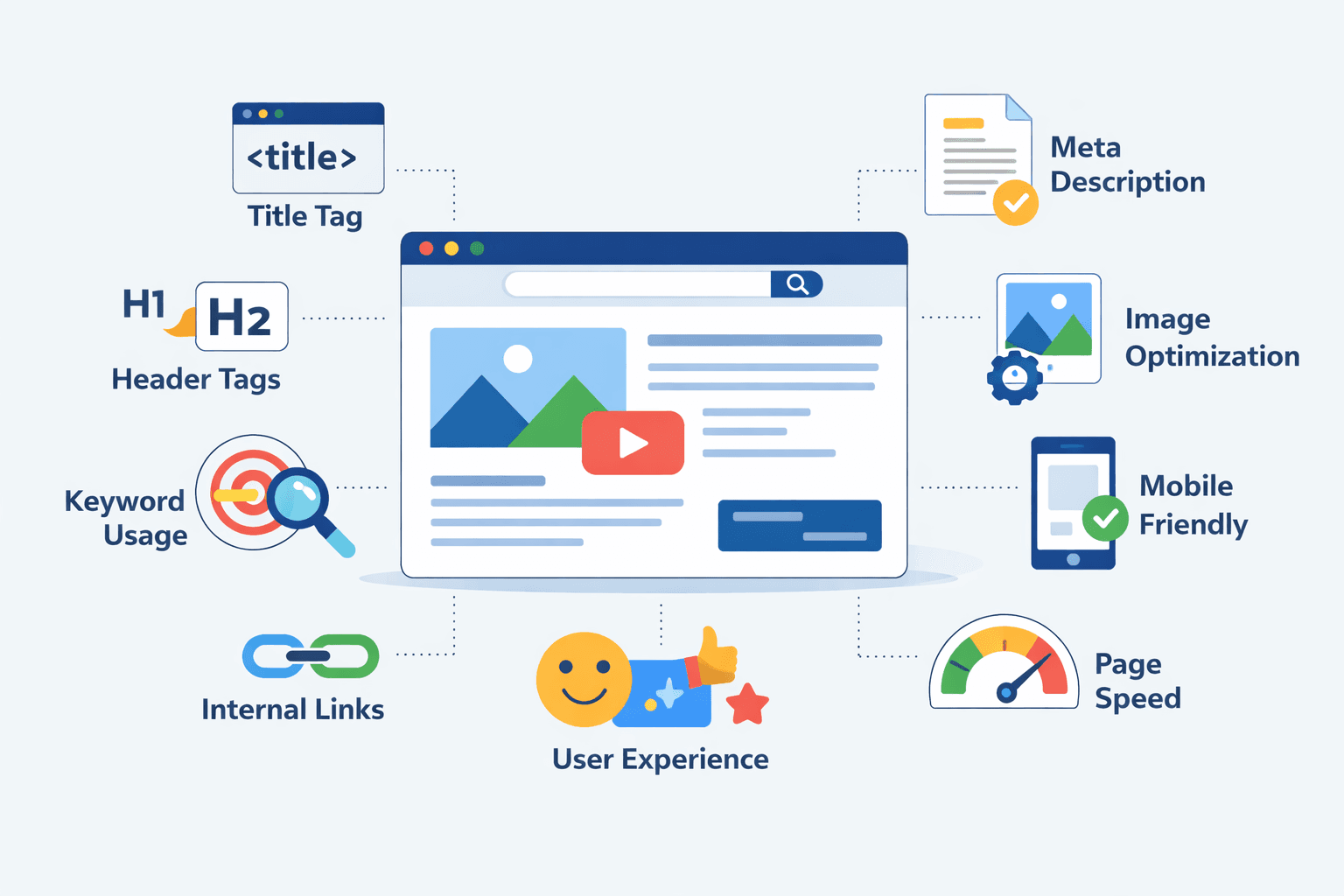
Google doesn’t rely on one metric; it blends systems. To achieve a strong website page ranking and visibility, pages must align with human expectations and machine evaluation. The most important Google ranking factors revolve around three strategic principles:
Authority, Relevance, and Experience
Authority = trust signals
Relevance = intent matching
Experience = page performance and quality
Key Elements Contributing to High Ranking
- Backlink authority is built naturally, not artificially
- Meaningful content depth answering user intent
- Strong site architecture, speed, and technical quality
When these align, the result is often a high page rank, supporting long-term dominance in the ranking of web pages.
PageRank vs Modern Ranking Signals
Even in 2026, SEO professionals need to understand how the PageRank algorithm fits into modern search. PageRank measures link-based authority. Machine learning models analyse context, freshness, semantic meaning, and behaviour signals. One isn’t replacing the other; they coexist.
So while people ask what page rank is in today’s digital landscape, the answer reflects evolution. PageRank is a core layer. Modern ranking systems add nuance. Ranking engines do not just count links; they evaluate link quality, placement, context, anchor relationship, content expertise, and engagement data.
Thus, chasing authority remains essential, but it works alongside UX and intent alignment. Achieving measurable website page ranking improvement means focusing on quality content backed by true reputation signals.
Why PageRank Still Matters
- Trust and authority remain the ranking currency
- Links serve as confirmation of value
- Strong pagerank sites pass powerful equity
Real Signals Google Uses to Rank Today
Google evaluates signals that demonstrate real value. To rise in the ranking of web pages, content must satisfy user needs while signalling authority.
The most important Google ranking factors include:
- Content quality and topical expertise
- Relevance to search intent
- User experience metrics
- Natural link acquisition and brand mentions
Most importantly, content must be aligned to search intent: informational, commercial, navigational, or transactional. Intent-fit pages get rewarded with higher visibility and long-term authority.
Understanding the Mathematics Behind PageRank
The pagerank formula works by distributing value from one URL to another. Think of it like academic citations; each reference increases credibility when it comes from trustworthy sources. This framework underpins both old-school SEO and modern semantic ranking.
Even after algorithmic expansions, PageRank still forms a measurable trust signal. Advanced search professionals and data SEO teams still analyse link graphs, evaluate domain strength, and track authority flow because the PageRank algorithm remains instrumental.
If you're working to build high page rank, your focus must be on genuine signals: editorial links, expert mentions, earned placements, and brand citations.
Modern Authority Growth Methods
- Earn links through research, tools, and original content
- Collaborate with niche experts for real authority flow
- Build topical clusters that strengthen internal authority
This contributes to better website page ranking stability and long-term domain significance.
Where PageRank Lives in Today’s Ranking Framework
Today’s AI-assisted engines consider signals beyond links: semantics, UX, behaviour patterns, and machine-learning interpretation. Yet, none of these erased PageRank. It lives inside a larger system.
Understanding what page rank is is understanding Google's foundation: trust matters. It’s not about chasing numbers; it’s about credibility. Systems evolve, but authority remains predictable. With each Google shift, the most important Google ranking factors only reinforce expertise, relevance, and authenticity.
To achieve a high page rank, marketers must think quality first. PageRank rewards truly earned signals, and AI systems amplify them when accuracy and expertise are evident.
Final Perspective: Mastering the Page Ranking System
As AI search accelerates, many overlook the fundamentals. Search success today means understanding how the PageRank formula and AI intent systems work together.
PageRank builds the structure. Modern ranking layers evaluate behaviour, semantics, and satisfaction. To win long-term visibility, brands must integrate expertise, earned links, authority signals, and a great user experience. PageRank was the blueprint, and its DNA powers today's smart search systems.
The future belongs to websites that combine the strength of pagerank with deep content, real authority, and human-aligned value. As long as the web references knowledge, trust-based signals will remain central to the ranking of web pages and sustainable SEO victory.