Table of Contents
- Understanding Voice Search and Zero-Click
- The Impact of Voice Search on Local Business
- Why Google Business Profile Matters for Voice
- Essential Steps to Optimize GMB for Voice Search
- Complete Your Profile Information
- Use Conversational Keywords and Natural Language
- Optimize for Local Search Intent
- Encourage and Manage Customer Reviews
- Zero-Click Search Optimization Strategies
- Target Featured Snippets
- Leverage Local Pack Optimization
- Implement Schema Markup
- Advanced Optimization Techniques
- Create FAQ Content
- Optimize for "Near Me" Searches
- Mobile-First Optimization
- How to Track Zero Click Searches
- Google Search Console Tracking
- Alternative Tracking Tools
- Brand Visibility Metrics
- Common Mistakes to Avoid {#common-mistakes}
- Incomplete Profile Optimization
- Ignoring Conversational Keywords
- Neglecting Review Management
- Best Practices for GBP Voice Assistants {#best-practices}
- Maintain Consistent Information
- Regular Content Updates
- Monitor Performance and Adapt
- Future-Proofing Your Strategy {#future-proofing}
- Embrace AI and Machine Learning
- Multi-Modal Search Preparation
- Continuous Learning and Adaptation
- Conclusion
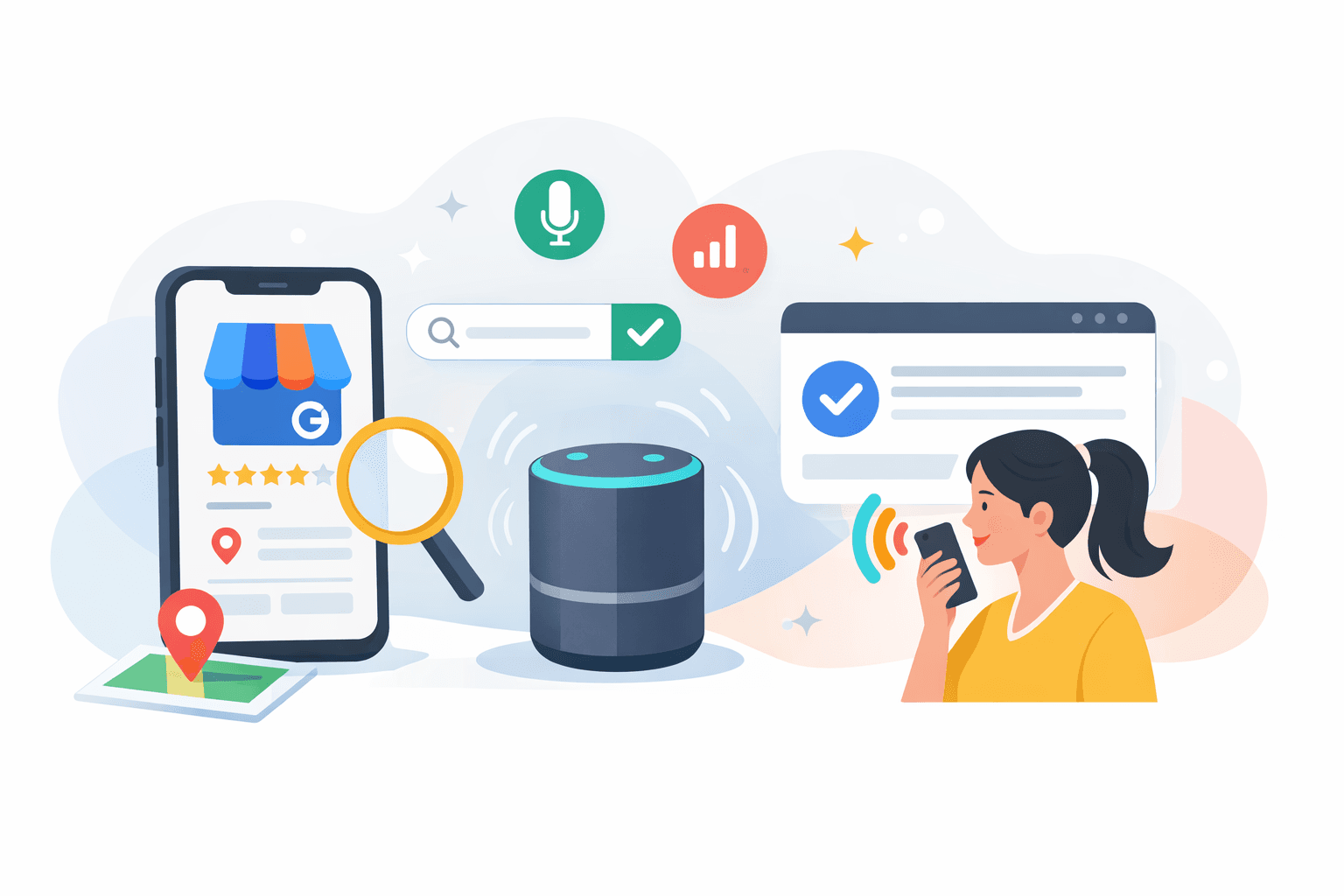
In today's rapidly evolving digital landscape, businesses must adapt to changing search behaviors to maintain visibility and attract customers. The rise of voice search and zero-click results has fundamentally transformed how users interact with search engines, making it essential for local businesses to optimize GMB for voice search and prepare for a future where answers are delivered directly on search results pages.
GMB and voice search optimization has become a critical component of local SEO strategy, as more than half of all voice searches have local intent. When users ask their voice assistants "Where's the nearest coffee shop?" or "Is the pharmacy open now?", Google relies heavily on Google Business Profile data to provide accurate, immediate responses.
The shift toward zero-click searches, where users find answers directly on search engine results pages without clicking through to websites, presents both challenges and opportunities for businesses. Understanding what position zero is and how to leverage it alongside voice search optimization can dramatically improve your business visibility and customer acquisition in an increasingly competitive digital marketplace.
Understanding Voice Search and Zero-Click
Voice search optimization for businesses begins with understanding how voice queries differ fundamentally from traditional text-based searches. While typed searches typically use fragmented phrases like "pizza near me," voice searches are conversational and complete, such as "Where can I find the best pizza near me?".
Zero-click searches occur when users find answers directly on search engine results pages through featured snippets, knowledge panels, local packs, or AI overviews without clicking through to any website. Recent studies indicate that nearly 60% of Google searches result in zero clicks, with mobile searches showing even higher rates.
Types of zero-click search results include featured snippets, direct answer box, AI overview, knowledge panel, local pack, and people also ask
The intersection of voice search and zero-click results creates a unique optimization challenge. Voice assistants often pull information from featured snippets and local business listings to provide spoken responses. This means businesses must optimize zero-click search results for GMB to ensure their information appears in both voice responses and visual search results.
Understanding user intent is crucial for both optimization strategies. Voice searches frequently include question words like "what," "where," "how," and "when," while zero-click queries often seek immediate factual information or local business details.
The Impact of Voice Search on Local Business
Google My Business voice search optimization has become essential as local discovery patterns evolve. More than 50% of voice searches have local intent, with users seeking nearby services, business hours, contact information, and directions.
76% of local smartphone searches lead to a business visit within 24 hours, with 28% resulting in a purchase
The statistics are compelling: 76% of people who conduct local searches on smartphones visit a business within 24 hours, and 28% of those searches result in purchases. For voice searches specifically, the numbers are even more impressive, as voice queries often indicate immediate intent and higher conversion potential.
Voice assistants prioritize businesses with complete, accurate, and optimized Google Business Profiles. When someone asks "Is there a bakery open near me?", Google checks local business listings to provide immediate answers, making profile optimization crucial for voice search visibility.
The conversational nature of voice search also means businesses must think differently about keyword targeting. Instead of optimizing for "dentist Chicago," businesses should consider phrases like "good dentist near me" or "dentist open today in Chicago".

Why Google Business Profile Matters for Voice
GBP for voice assistants serves as the primary data source for local business information in voice search results. Voice assistants like Google Assistant, Siri, and Alexa rely on structured business data to provide accurate responses to location-based queries.
Google Business Profile acts as your digital storefront for voice search, containing essential information that voice assistants need to recommend your business. This includes your business name, address, phone number, hours of operation, services offered, and customer reviews.
The relationship between GMB and voice search extends beyond basic information delivery. Voice assistants consider factors like review ratings, response rates to customer inquiries, photo quality, and posting frequency when determining which businesses to recommend.
Optimized profiles also increase the likelihood of appearing in local pack results, which often serve as sources for voice search responses. When your business appears in the local three-pack for relevant searches, it becomes more likely to be mentioned in voice assistant responses.
Essential Steps to Optimize GMB for Voice Search
Complete Your Profile Information
The foundation of voice search optimization for businesses starts with comprehensive profile completion. Every field in your Google Business Profile should be filled out accurately and completely, as incomplete profiles are less likely to appear in voice search results.
Essential elements include:
-
Business name and category: Use your exact business name and choose the most specific primary category
-
Complete address and service areas: Accurate location data is crucial for location-based voice queries
-
Phone number: Ensure it's current and easily accessible for voice users who often call directly
-
Business hours: Include special hours for holidays and events, as "is [business] open now?" is a common voice query
-
Website and relevant links: Direct users to specific landing pages for different services
Use Conversational Keywords and Natural Language
Voice search queries are conversational, requiring a shift from traditional keyword optimization to natural language patterns. GMB and voice search optimization means incorporating question-based phrases and long-tail keywords that match how people actually speak.
Instead of focusing solely on "Italian restaurant," optimize for phrases like:
-
"Where can I find authentic Italian food?"
-
"Best family-friendly Italian restaurant near me"
-
"Italian restaurant with outdoor seating"
Write your business description using natural, conversational language that answers common customer questions. This helps voice assistants match your business to spoken queries.
Optimize for Local Search Intent
Local optimization remains crucial for Google My Business voice search success. Voice searches with local intent often include modifiers like "near me," "nearby," or specific location names.
Key strategies include:
-
Location-specific content: Create posts about local events, community involvement, or area-specific services
-
Service area optimization: Clearly define and optimize for all areas you serve
-
Local keyword integration: Include neighborhood names, landmarks, and local terminology naturally in your content
Encourage and Manage Customer Reviews
Customer reviews play a significant role in voice search rankings. Voice assistants often reference review ratings and may even read review excerpts when recommending businesses.
Effective review management involves:
-
Proactive review requests: Ask satisfied customers to leave detailed reviews mentioning specific services
-
Prompt responses: Respond to all reviews professionally and promptly
-
Review optimization: Encourage reviews that naturally include relevant keywords and service descriptions

Zero-Click Search Optimization Strategies
Optimize zero-click search results for GMB requires understanding how different SERP features work and how to target them effectively. Zero-click optimization focuses on providing immediate value while maintaining brand visibility.
Key strategies to optimize content for zero-click searches, including featured snippets, schema markup, E-E-A-T, and Google Business Profile optimization
Target Featured Snippets
Featured snippets represent a prime opportunity for zero-click visibility. What is position zero refers to these featured snippet positions that appear above traditional organic results.
To optimize for featured snippets:
-
Answer questions directly: Provide clear, concise answers in the first 40-60 words of your content
-
Use structured formatting: Implement bullet points, numbered lists, and clear headings
-
Target question keywords: Focus on queries beginning with "what," "how," "where," and "when"
Leverage Local Pack Optimization
Local pack results are a primary source of zero-click information for location-based searches. These three-business listings provide essential information without requiring users to click through to websites.
Optimization strategies include:
-
NAP consistency: Ensure your Name, Address, and Phone number are identical across all online platforms
-
Category optimization: Choose the most specific and relevant business categories
-
Local content creation: Develop content that addresses local search queries and community needs
Implement Schema Markup
Structured data markup helps search engines understand your business information better, increasing the likelihood of appearing in various SERP features.
Essential schema types for local businesses:
-
LocalBusiness schema: Provides comprehensive business information
-
FAQ schema: Helps target "People Also Ask" boxes
-
Review schema: Enhances review display in search results
Advanced Optimization Techniques
Create FAQ Content
Developing comprehensive FAQ sections addresses common voice search queries while positioning your business for featured snippet opportunities. GBP for voice assistants can benefit from FAQ optimization that covers typical customer questions.
Effective FAQ strategies:
-
Common question identification: Use Google's "People Also Ask" feature to identify relevant questions
-
Conversational answers: Write responses in natural language that voice assistants can easily read
-
Local question focus: Address location-specific inquiries and service area questions
Optimize for "Near Me" Searches
"Near me" searches represent a significant portion of voice queries, especially on mobile devices. These searches often result in immediate business visits or phone calls.
Optimization approaches:
-
Proximity signals: Ensure your business appears for searches within your service radius
-
Relevance optimization: Use local keywords and service terms that match "near me" intent
-
Conversion optimization: Make it easy for users to take immediate action (call, visit, or get directions)

Mobile-First Optimization
Voice searches predominantly occur on mobile devices, making mobile optimization crucial for voice search success. Voice search optimization for businesses must prioritize mobile user experience.
Key mobile considerations:
-
Page speed optimization: Fast-loading pages improve voice search performance
-
Mobile-responsive design: Ensure your website works seamlessly on all devices
-
Click-to-call functionality: Make it easy for voice search users to contact your business immediately
How to Track Zero Click Searches
Understanding how to track zero click searches is essential for measuring the success of your optimization efforts. Traditional metrics like click-through rates become less relevant in a zero-click environment.
Google Search Console Tracking
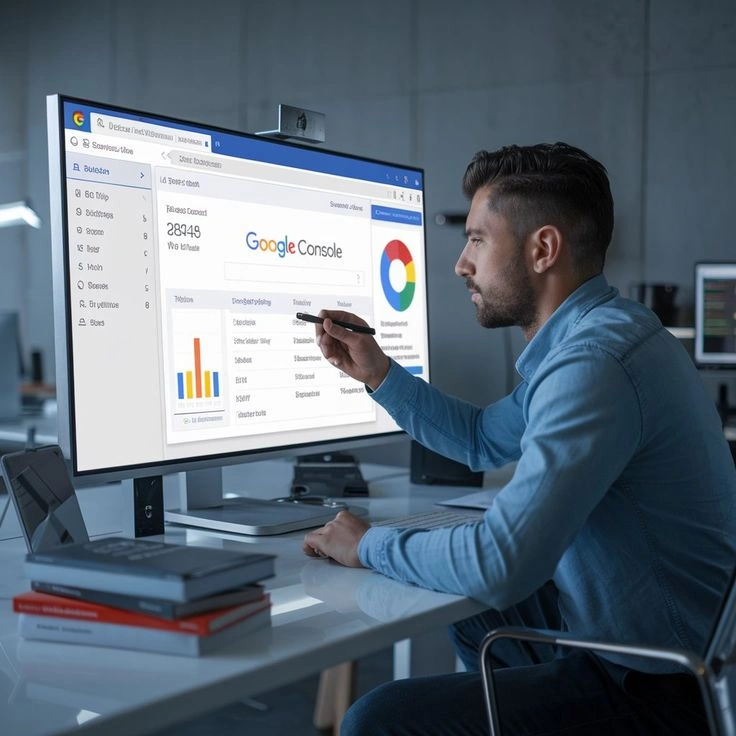
Google Search Console provides the most comprehensive data for tracking zero-click performance. Key metrics include:
-
Impressions data: Shows how often your business appears in search results
-
Average position tracking: Indicates your visibility in search results
-
Query analysis: Reveals which searches trigger your business listings
Set up custom reports focusing on:
-
Branded vs. non-branded impressions
-
Local pack appearances
-
Featured snippet opportunities
Alternative Tracking Tools
Several tools can supplement Google Search Console data for comprehensive zero-click tracking:
SEMrush: Offers position tracking features and organic research tools that identify top-performing pages and zero-click opportunities.
Ahrefs: Provides SERP analysis tools and keyword tracking that helps identify zero-click search patterns and competitor analysis.
Moz: Features zero-click search tracking capabilities within Moz Pro, including search visibility analysis and assisted conversion tracking.
Brand Visibility Metrics
How to track zero click searches effectively requires focusing on brand awareness and visibility metrics rather than traditional traffic-based measurements.
Important metrics include:
-
Brand impression growth: Track increases in branded search visibility
-
Direct traffic increases: Monitor for correlation between search visibility and direct website visits
-
Phone call attribution: Track calls generated from search appearances
-
Foot traffic analysis: Use location analytics to measure store visits attributed to search visibility
Common Mistakes to Avoid {#common-mistakes}
Incomplete Profile Optimization
Many businesses fail to fully complete their Google Business Profile, missing crucial opportunities for voice search visibility. Every field should be optimized, including business attributes, services, and special features.
Common oversights include:
-
Missing business hours for holidays or special events
-
Incomplete service descriptions
-
Outdated contact information
-
Missing business attributes (wheelchair accessible, Wi-Fi available, etc.)
Ignoring Conversational Keywords
Traditional keyword optimization often fails in voice search contexts. Businesses must adapt their keyword strategy to include natural language patterns and question-based queries.
Avoid:
-
Focusing only on short, fragmented keywords
-
Ignoring long-tail conversational phrases
-
Missing local modifiers and question words
-
Neglecting semantic variations of core terms
Neglecting Review Management
Poor review management can significantly impact voice search performance. Voice assistants consider review quality and quantity when making recommendations.
Review management mistakes:
-
Failing to respond to customer reviews
-
Not encouraging satisfied customers to leave reviews
-
Ignoring negative feedback
-
Missing opportunities for keyword optimization in review responses
Best Practices for GBP Voice Assistants {#best-practices}
Maintain Consistent Information
GBP for voice assistants requires absolute consistency across all online platforms. Voice assistants cross-reference information from multiple sources, and inconsistencies can hurt your visibility.
Ensure consistency across:
-
Business name, address, and phone number (NAP)
-
Business hours and special schedules
-
Service descriptions and offerings
-
Website links and social media profiles
Regular Content Updates
Voice search algorithms favor businesses that maintain active, current profiles. Regular updates signal to search engines that your business is active and relevant.
Update strategies:
-
Weekly posts: Share news, offers, events, or helpful tips
-
Seasonal content: Adjust for holidays, local events, or seasonal services
-
Photo updates: Add new images regularly to showcase your business
-
Service updates: Keep service descriptions current and comprehensive
Monitor Performance and Adapt
Successful voice search optimization for businesses requires ongoing monitoring and adaptation based on performance data and changing search behaviors.
Regular monitoring should include:
-
Voice search ranking positions
-
Local pack appearances
-
Customer question patterns
-
Competitor optimization strategies
Key strategies to optimize for zero-click searches including keyword targeting, Q&A content, featured snippets, voice search, and schema markup
Future-Proofing Your Strategy {#future-proofing}
Embrace AI and Machine Learning
As AI technology continues to evolve, businesses must prepare for increasingly sophisticated voice search capabilities. GMB and voice search optimization will likely become more dependent on AI understanding of user intent and context.
Preparation strategies:
-
Natural language optimization: Focus on conversational content that AI can easily understand and process
-
Intent-based optimization: Optimize for user intent rather than just keywords
-
Contextual relevance: Develop content that answers related questions and provides comprehensive information
Multi-Modal Search Preparation
Future search will likely combine voice, visual, and text inputs. Businesses should prepare for how to optimize for zero clicks across multiple search modalities.
Multi-modal considerations:
-
Visual content optimization: Ensure images and videos are optimized for search
-
Audio content: Consider podcast or audio content optimization
-
Cross-platform consistency: Maintain consistent optimization across all search types
Continuous Learning and Adaptation
The voice search landscape continues to evolve rapidly. Staying informed about algorithm updates, new features, and changing user behaviors is essential for long-term success.
Stay updated through:
-
Industry publications and research
-
Google Business Profile feature announcements
-
Voice search technology developments
-
Local SEO community discussions
Conclusion
Optimize GMB for voice search and zero-click results requires a comprehensive approach that goes beyond traditional SEO tactics. The convergence of voice search technology and zero-click search results represents a fundamental shift in how users discover and interact with local businesses.
Successful voice search optimization for businesses demands attention to conversational keywords, complete profile optimization, active review management, and consistent monitoring of performance metrics. Understanding what is position zero and how to leverage featured snippets, local packs, and other SERP features becomes crucial for maintaining visibility in an increasingly competitive digital landscape.